_1745479303268.webp)
Can Ankle Support Kinesio Tape Prevent Future Injuries?
2026-07-16 10:02:51
Kinesio tape for ankle support can help avoid accidents by improving proprioception and joint stability, but it works best when used as part of a larger plan to stay healthy. This stretchy therapy tape helps strengthen muscles around weak ankle structures while still letting you move normally. This makes it useful for workplace safety programmes. Researchers have found that ankle support Kinesio tape can help lower the risk of re-injury by giving constant sensory feedback that encourages the right way to move. Its success depends on how it is used, whether the person has had an injury before, and whether they do strengthening routines at the same time.
Understanding Ankle Support Kinesio Tape and Its Benefits
Ankle injuries are a big problem in professional sports, healthcare, and the workplace. When buying, managers and sellers think about how to stop problems, they naturally look for new ways to protect things while still making them work.
Composition and Design Characteristics
Ankle Support Kinesio Tape is different from hard strapping systems because it uses cotton fibres that are stretchy and special plastics that can stretch up to 180% of their original length. The nontoxic acrylic glue hardens when heated by body heat, making a strong bond that lasts for three to five days, even when it gets wet or moves. This way of thinking about design puts the comfort of the skin first while still allowing therapeutic touch, which addresses common problems with standard bracing methods. Medical-grade versions go through strict biocompatibility tests to make sure they are safe to wear for long amounts of time. They also meet international standards that are necessary for hospitals and pharmacies to sell them.
Therapeutic Mechanisms
There are several biochemical routes that the tape uses that make it different from passive support devices. When used with the right amount of strain, it pulls the skin microscopically, making room that helps lymphatic drainage and lowers interstitial pressure. This system works better than bracing alone to help control swelling after an accident. Continuous sense feedback from the tape improves proprioceptive awareness, which basically tells the neuromuscular system to keep its balance while doing active tasks that are always changing. Clinical findings show better muscle activation patterns around taped joints. This makes the joints more stable without limiting their useful range of motion, which is very important for workers who can't afford to be limited in their mobility.
Workplace Application Benefits
When people get ankle injuries at work, it can really hurt their mood and how much work they get done. These problems can be solved with ankle support kinesio tape, which helps workers who do the same things over and over, walk on uneven floors, or go back to work after a small injury. The flexibility lets you move freely while doing difficult tasks and gives you support when you're in a weak situation. Due to its versatility, it is especially useful in places like factories, warehouses, and hospitals where workers are on their feet for long periods of time. Less time missed from work because of injuries directly leads to more efficient operations, which makes this option appealing to safety coordinators looking for low-cost tools to avoid accidents.
Comparing Ankle Kinesio Tape With Other Support Options
To choose the right ankle support, you need to know how different products work in different situations. When making a purchase choice, it helps to have clear comparisons that focus on real differences instead of marketing claims.
Material and Functional Differences
Because it is made of inelastic cotton, athletic tape is very rigid and can successfully immobilize joints during accident recovery or high-impact activities. But this security comes at the cost of being uncomfortable and limited movement, which makes it less useful for long-term use or prevention-focused uses. Compression sleeves apply steady pressure around the body through knitted stretchy materials, which improves blood flow without sticking to the skin. They don't have the focused support and improved proprioception that therapeutic tape gives. Kinesio tape for ankle support is in the middle because it supports certain muscle groups and tendon paths while letting natural biomechanics happen. Because it's waterproof, you can wear it while washing or sweating and still get the therapeutic effects. This is a useful advantage over devices that you have to take off and put back on.
Selection Criteria for B2B Buyers
When looking for partners for marketing or OEM, several technical details need to be carefully considered. For skin irritation-free removal, adhesive power must strike a balance between strong bonding and gentle removal. This is especially important for older people or people with sensitive skin. The amount of stretch in the tape affects how well it can hold its shape while the joint moves. Higher stretch ratios are better for dynamic uses, while moderate flexibility is better for stability goals. The backing material affects how well it breathes and how long it lasts. Blends of cotton are more comfortable, while synthetic materials may be better at keeping water out. To make sure that all target markets follow the rules, buyers should ask for information on the adhesive's makeup and proof that it is biocompatible. By understanding these technical details, you can make smart choices that match the product's features with what the end user wants.
Brand Quality Benchmarks
Application Techniques and Usage Guidelines
When used correctly, therapeutic tape can be turned from an inactive item into an active tool for action. Distributors who offer a wide range of usage resources set themselves apart in crowded markets and make customers happier at the same time.
Step-by-Step Application Protocols
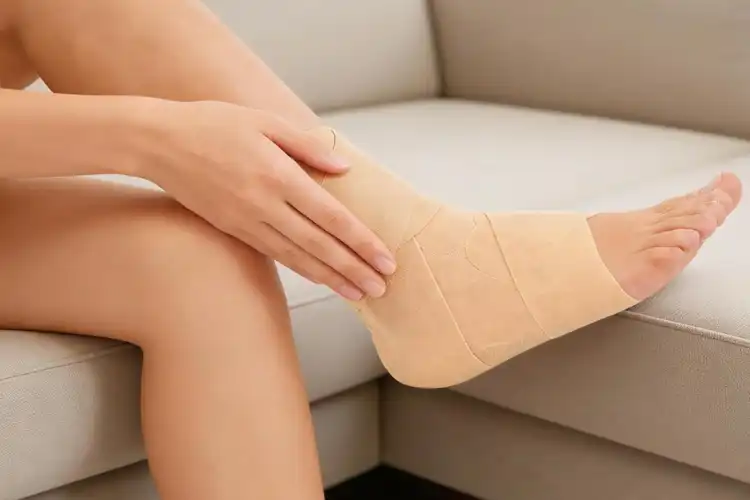
To tape well, the skin must be clean, dry, and free of lotions or oils that make it hard for the tape to stick. Ankles should be in a neutral, useful angle, which is usually 90 degrees, so they don't cause tension that gets in the way of regular movement. Anchor strips are put on without stretching to set stable beginning and finishing places. Therapeutic sections, on the other hand, include 25–50% stretch, depending on the result that is wanted. To support the outside of the ankle, pieces go from the inner arch, across the lateral malleolus, and up the outside of the leg, following the path of the anterior talofibular ligament. By rubbing the tape that has been applied, heat is created that sets off the glue for the best sealing. For these exact techniques to work, there must be clear visual directions. Procurement teams can provide these through printed guides or digital platforms, which makes them more valuable for healthcare facilities and workplace safety programmes.
Optimal Wear Duration and Replacement Cycles
To keep the healing effects while protecting skin health, you need to know when to wear your products. Kinesio tape for ankle support usually works for three to five days. After that, the glue starts to lose its strength because it is exposed to wetness and mechanical stress. People should take off the tape if it starts to itch, turn too hot, or hurt, but a little pinkness is normal right after taking it off. Leaving the skin alone for a few hours between uses keeps it from getting irritated over time, especially during the first few uses. Giving this information through package notes or customer service tools lowers the chance of misuse and the complaints that come with it. Teaching people how to remove things by using oil or glue removers to make the process less painful shows that you care about the user experience and can lower the number of people who give up on a product.
Evaluating Effectiveness: Can Kinesio Tape Prevent Future Ankle Injuries?
The clinical proof gives us more detailed information about how kinesio tape for ankle support can help avoid injuries. This helps buyers set realistic goals and see the real benefits.
Research Findings on Injury Prevention
A 2018 systematic review in the Journal of Sports Sciences looked at 12 controlled studies that tested how ankle support Kinesio tape affected the chance of getting an ankle sprain again. When muscle training classes were combined with taping, the rate of re-injury went down slightly but statistically significantly. The proprioceptive improvement seems to work best six months after the accident, when muscle patterns are still not working properly. Studies that test single-leg balance performance show that stable scores are higher when the legs are taped than when they are not taped. This suggests that taped conditions provide better sensory input during dynamic tasks. But a study also shows that it has some flaws. For example, tape alone can't make up for bad therapy or biomechanical problems that need to be fixed. These results support the idea that kinesio tape for ankle support is better used as an important part of a larger plan to avoid injuries rather than as a stand-alone answer.
Real-World Implementation Outcomes
Healthcare centers that use therapeutic taping as part of their post-injury practices see better patient compliance than those that use hard bracing. The good looks and ease of kinesio tape for ankle support make people more likely to keep using it, which solves a typical problem where patients stop using uncomfortable supports too soon. Case studies from manufacturing plants show that workers who use preventative taping during high-risk jobs have fewer accidents that cause lost time. Over the course of 18 months, the ankle-related accident rate dropped by 23% at one warehouse distribution centre that offered an optional taping programme to workers who had previously been hurt. According to comments from distributors, occupational health providers are looking for tools that are based on proof and combine safety with productivity. These real-world results show that spending money on good tapes and teaching materials that work best in the real world is worth it.
Procurement Considerations for B2B Buyers
When making strategic sourcing decisions, you need to look at more than just unit price to make sure the relationship will work in the long run and that the customer is happy.
Technical Specifications and Quality Standards
The most important performance factor is the adhesive substance, which determines how long it will last and how well it will stick to skin. Medical-grade acrylics are nontoxic, which is important for healthcare uses. Industrial-grade acrylics, on the other hand, may focus on strong bonding for tough settings. Testing for elasticity should make sure that the stretchiness is the same across production batches. This will stop application differences that hurt therapy results. People who are likely to get wet should pay attention to waterproof ratings. Products that stay stuck through multiple shower cycles are a better value, even if they may cost more. Buyers should ask for biocompatibility test results that show the product meets ISO 10993 standards. This is especially important when dealing with hospital systems or drugstore chains that have strict safety rules. These technical checks protect the brand's image and make sure that it follows the rules in many different places.
Setting up reliable supply lines is very important when you're working with healthcare companies or safety programs at work that need products to be available all the time. Manufacturers with certifications like ISO 13485 show that they have quality control systems that are meant to make medical devices, which lowers the risk of supply disruptions. Minimum order amounts need to match product turnover rates so that capital doesn't get stuck and there aren't shortages when demand goes up. Lead times affect how quickly you can respond to changes in demand caused by seasonal factors or sudden rises in volume from big business contracts. When looking for chances that need to be done quickly, building relationships with providers that offer flexible production schedules and the ability to handle rush orders gives you a competitive edge. Buyers should check the production ability and back-up supply plans to make sure that the business can keep going even if there are unexpected problems.
Value-Added Services and Support
In competitive markets, services that go beyond core goods are becoming more and more important for setting you apart. Distributors and brand owners can strengthen their market identity and command premium placement by offering custom packages with private labelling. Application training tools, like written materials, video lessons, or in-person demos, make it easier for end users to do what they need to do and lessen the need for customer support. Some forward-thinking providers give procurement clients co-branded training tools that they can give to their customers. This creates shared value all the way through the distribution chain. When problems happen, being able to get technical help is important. Suppliers with responsive contact methods and informed service teams build trust, which leads to long-term partnerships. These things that add value make price increases reasonable and encourage trust in relationships where dependability and quality are more important than cost.
Conclusion
Ankle support kinesio tape is a useful part of injury prevention plans because it improves proprioception and provides practical support, which sets it apart from stiff options. Research has shown that it can't stop all accidents on its own, but it can help people become more aware of their joints and change the way they move, which has real benefits in both sports and the workplace. The tape's flexibility, comfort, and ability to last longer than usual wear make it easier for people to follow through with standard bracing methods. Distributors and OEM partners can do well in the growing healthcare and workplace safety markets if they make smart decisions about how to buy things. These choices should be balanced between technical quality, source trustworthiness, and value-added services.
FAQ
How long can ankle support kinesio tape be worn safely?
When properly applied to clean, dry skin, ankle support kinesio tape usually works and is safe for three to five days in a row. Users should keep an eye out for irritation signs like swelling, itching, or pain, and take off the tape right away if these happen. Giving the skin a few hours to rest between uses helps keep it healthy during long-term use.
Does kinesio tape reduce ankle swelling effectively?
The pulling action of the tape makes room under the skin that lets lymphatic fluid drain, which helps reduce swelling more effectively than doing nothing. However, for new injuries with a lot of swelling, it's best to use tape along with elevation, ice, and compression, which are all part of normal RICE procedures. The tape keeps the swelling under control during daily tasks when other ways aren't possible.
How does ankle kinesio tape compare with ankle braces?
Ankle-support kinesio tape is more comfortable and lets you move around more than hard braces, so it's better for prevention and minor support needs. When there is mild to serious instability or when doing high-impact tasks, braces make the body more stable. Many people find that tape is easier to wear for longer periods of time and doesn't show as much under clothes, which makes it easier to follow through at work or in everyday life.
Partner With Guanma for Premium Ankle Support Kinesio Tape Manufacturing
Guanma Medical is the only company that makes ankle support kinesio tape, and they have been making medical glue products for over 30 years. Our ISO 13485 and CE-certified factories make sure that every roll meets the strict biocompatibility standards needed for medical uses. We offer full OEM and ODM customization, from private label packing and brand-specific colour choices to glue formulation and elasticity specs. Our responsive technology team works closely with distributors, brand owners, and healthcare buying professionals to create custom solutions that meet the needs of each market. Our flexible minimum order amounts, dependable supply lines, and reasonable pricing structures made just for business-to-business relationships can help you. Get in touch with betty@guanmamedical.com right away to talk about how our Ankle Support Kinesio Tape options can help you offer more products and give your customers the quality they expect.
References
1. Williams S, Whatman C, Hume PA, Sheerin K. "Kinesio taping in treatment and prevention of sports injuries: a meta-analysis of the evidence for its effectiveness. "Sports Medicine 42.2 (2012): 153-164.
2. Mostafavifar M, Wertz J, Borchers J. "A systematic review of the effectiveness of kinesio taping for musculoskeletal injury." The Physician and Sportsmedicine 40.4 (2012): 33-40.
3. Bicici S, Karatas N, Baltaci G. "Effect of athletic taping and kinesiotaping on measurements of functional performance in basketball players with chronic inversion ankle sprains. "International Journal of Sports Physical Therapy 7.2 (2012): 154-166.
4. Briem K, Eythorsdottir H, Magnusdottir RG, Palmarsson R, Runarsdottir T, Sveinsson T. "Effects of kinesio tape compared with nonelastic sports tape and the untaped ankle during a sudden inversion perturbation in male athletes." Journal of Orthopaedic & Sports Physical Therapy 41.5 (2011): 328-335.
5. Delahunt E, Cusack K, Wilson L, Doherty C. "Prophylactic taping for ankle injuries: a systematic review." British Journal of Sports Medicine 48.2 (2014): 139-143.
6. Raymond J, Nicholson LL, Hiller CE, Refshauge KM. "The effect of ankle taping or bracing on proprioception in functional ankle instability: a systematic review and meta-analysis." Journal of Science and Medicine in Sport 15.5 (2012): 386-392.