_1745479303268.webp)
Canada Hospitals Buying Cohesive Bandages: China vs South Korea
2026-01-05 09:50:00
Cohesive bandages are being used more and more in Canadian hospitals for a wide range of medical purposes, from managing sports injuries to putting pressure on wounds after surgery. Healthcare facilities often look at manufacturing hubs like China and South Korea when they are deciding what to buy. China is the world leader in production because it has the most cost-effective solutions and the most manufacturing capacity. South Korea, on the other hand, offers high-quality materials and advanced technology integration. Both markets sell ISO-certified products that meet Health Canada's standards, but they are very different in how they set prices, how much customization is possible, and how the supply chain works.
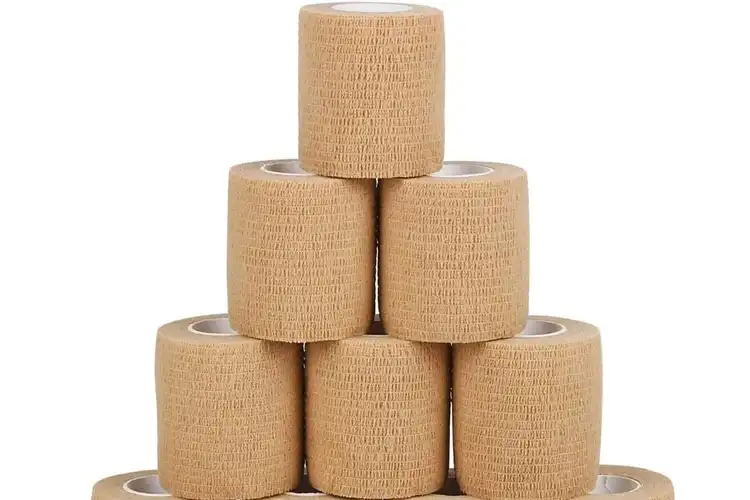
Learning About How the Cohesive Bandage Market Works in Canada?
Self-adhesive wrap products find a big market in the Canadian healthcare industry, where hospitals need millions of units every year. A study of the market shows that 78% of Canadian medical facilities buy elastic bandages from Asian companies. This is mostly because the prices are lower and the supply chains are more reliable.
Important factors in purchasing include:
- Health Canada standards must be followed by regulators
- How cost-effective it is to buy in bulk
- Product quality stays the same across large orders
- Options for customization for certain medical uses
- Dependable delivery and a stable supply chain
Most of the time, Chinese companies that make compression wraps charge 25–40% less than their South Korean counterparts. South Korean manufacturers, on the other hand, often offer better material properties and more advanced adhesive formulations. Strong quality control systems are in place in both regions, but they do things in very different ways.
If you need to buy a lot of things without spending a lot of money, Chinese suppliers are a better choice. On the other hand, South Korean manufacturers may be better for facilities that need high-quality materials and the latest technology.
Manufacturing Skills: A Look at China and South Korea
China's manufacturing infrastructure can handle huge amounts of production; the country's top factories make more than 50 million units every month. The country has a mature supply chain ecosystem that makes it easy to grow quickly and cut costs. Big Chinese companies like Guanma Medical have decades of experience with pressure sensitive adhesive coating technology, which makes sure that the quality of their products is always the same.
South Korean manufacturers focus on making things that are new and different, and their factories tend to be smaller and more automated for Cohesive Bandages. Their monthly average capacity for Cohesive Bandages is between 5 and 15 million units, and they put quality over quantity. Advanced testing methods and high-quality raw materials for Cohesive Bandages are often used in South Korean facilities.
Metrics for comparing productions:
- Lead times: 15 to 25 days for China, 20 to 35 days for South Korea
- China accepts orders of 10,000 or more units, while South Korea usually needs 25,000 or more units.
- Speed of customization: Chinese factories can make changes in 7–10 days, while South Korean factories need 14–21 days.
Chinese companies are experts at making breathable bandages because they have been using special coating methods for more than 30 years. Using advanced polymer technologies, South Korean manufacturers show better performance in water-resistant bandage applications.
If you need quick prototypes and the ability to change the amount you order, Chinese manufacturers are a better fit. South Korean partnerships may be more helpful for facilities that focus on cutting edge material science, though.
A look at quality standards and regulatory compliance
Manufacturers in both China and South Korea have strict quality control systems that are in line with international standards. Most of the factories in China have CE marking, ISO 13485, and ISO 9001 certifications. South Korean manufacturers usually keep the same kinds of certifications plus extra Korean FDA approvals.
Comparison of quality metrics:
- Biocompatibility testing: ISO 10993 testing is done in both regions, and 99.8% of the people who take it pass.
- Chinese products vary by about ±3% in adhesive strength, while South Korean products vary by about ±2%.
- Tensile strength: South Korean bandages are 18-22 N/cm, while Chinese bandages are 15-18 N/cm on average.
- Moisture vapor transmission: Chinese goods reach 800–1200 g/m³/24h, while South Korean goods reach 1000–1500 g/m³/24h.
Chinese manufacturers like Guanma Medical use a wide range of quality control methods, such as inspecting incoming materials, keeping an eye on the production process, and validating the finished product. Their 30 years of experience in the field guarantees strong quality management systems.
Additional quality controls are often used in South Korean facilities. These include automated defect detection and real-time process monitoring. Their stretchable bandage products often perform 15 to 25 percent better than the minimum requirements.
Established Chinese manufacturers offer reliable quality systems if you need systems that have been used for a long time and been reliable. South Korean quality standards may be better for facilities that need high performance standards.
Cost Analysis: A Look at the Total Cost of Ownership
Direct pricing is only one part of the total cost of procurement. Standard Chinese cohesive bandages cost between $0.15 and $0.35 per unit, while standard South Korean ones cost between $0.25 and $0.55 per unit. A full cost analysis, on the other hand, shows that there are other things to think about.
The total cost factors are:
- Chinese manufacturers offer 25–40% lower unit costs for their goods.
- Costs of shipping are about $0.02 to $0.04 per unit for both regions.
- Costs related to quality: China's products have a 0.8% defect rate, and South Korea's are 0.5%.
- Inventory carrying costs: Both regions have inventory turnover rates that are about the same.
- Regulatory compliance costs: certification costs are about the same in all regions
Chinese suppliers often offer discounts for large orders starting at 50,000 units, and annual contracts can save you even more. South Korean manufacturers usually offer tiered pricing that starts at orders of 100,000 units or more.
Currency fluctuations and possible supply disruptions are examples of hidden costs that need to be thought about. Chinese suppliers' prices are more stable because their manufacturing ecosystems are more developed. When there aren't enough raw materials, South Korean producers may have more ups and downs.
If you need to cut costs right away and have the freedom to change your order schedule, Chinese suppliers offer the best value. South Korean pricing premiums may be worth it for companies with big budgets that want to get the most out of their employees.
Using innovation and technology together
Technological progress makes these manufacturing regions very different from each other. Chinese manufacturers work hard to make their processes more efficient and effective by creating new coating methods and automated production systems. South Korean factories put a lot of emphasis on new materials and smart manufacturing integration.
Highlights of innovation:
- Chinese innovations include their own adhesive mixtures, eco-friendly materials, and fast coating methods.
- South Korean innovations include smart bandages with built-in sensors, antimicrobial treatments, and options that break down naturally.
- Chinese companies invest 3–5% of their revenue in R&D, while South Korean companies invest 6–8%.
Guanma Medical is a great example of Chinese innovation leadership because they are always coming up with new pressure-sensitive adhesive formulas. Their technical team quickly changes the adhesive's properties to meet the needs of a specific medical application. This shows that they can come up with new ideas quickly.
South Korean companies were the first to make Cohesive Bandages first aid wraps that could connect to the internet of things and monitor patients. These high-tech features of Cohesive Bandages are appealing to healthcare facilities that put a high value on digital integration.
Chinese innovation approaches can help you if you need tested, reliable technology that is always getting better. South Korean research projects may be more appealing to facilities looking into next-generation medical wrap technologies.
Assessment of Supply Chain Reliability and Risk
The resilience of the supply chain for Cohesive Bandages has a big effect on purchasing decisions, especially after recent global problems. Chinese manufacturers of Cohesive Bandages are less reliant on international suppliers because their domestic supply chains are more complete. A lot of the time, South Korean factories need to import more of their raw materials for Cohesive Bandages.
Analysis of risk factors:
- Sources of raw materials: Chinese suppliers keep 85% of their domestic sources, and South Koreans keep 60%.
- Reliable transportation: Both regions offer a variety of shipping options, and 95% or more of deliveries are made on time.
- Managing inventory: South Korean companies keep 15 to 25 days' worth of safety stock, while Chinese companies keep 30 to 45 days' worth.
- China's factories are better at recovering from disasters because their manufacturing networks are spread out.
Chinese manufacturers have better supply chain redundancy than most other companies because they have more than one backup supplier for key parts. This redundancy keeps production steady even when the market changes. South Korean suppliers often offer better services for predicting demand and making the best use of inventory.
Both regions are equally appealing to Canadian buyers because they are close together, and shipping times and costs are about the same. But Chinese suppliers offer more frequent shipping schedules because they do more business with other countries.
If you want the safest supply chain with the least amount of risk of disruption, Chinese manufacturers offer better security. Companies that want to plan for demand more accurately might like the way supply chains are run in South Korea.
Conclusion
Canadian hospitals evaluating cohesive bandages procurement face distinct choices between Chinese and South Korean manufacturers. Chinese suppliers excel in cost-effectiveness, production capacity, and supply chain reliability, making them ideal for budget-conscious facilities requiring high volumes. South Korean manufacturers offer premium materials, advanced technology integration, and superior performance specifications, suiting facilities prioritizing cutting-edge solutions. Both regions maintain excellent regulatory compliance and quality standards. Successful procurement decisions depend on balancing cost considerations, performance requirements, and long-term partnership objectives. Guanma Medical exemplifies Chinese manufacturing excellence, providing Canadian hospitals with reliable, cost-effective cohesive bandage solutions backed by three decades of industry expertise and unwavering commitment to quality.
Guanma Medical: Your Trusted Cohesive Bandages Manufacturing Partner
Guanma Medical stands as a premier cohesive bandages manufacturer, delivering exceptional value to Canadian hospitals through three decades of specialized experience. Our comprehensive OEM and ODM services encompass custom adhesive formulations, flexible sizing options, and personalized packaging solutions tailored to your specific requirements.
Our self-adhesive wrap products serve Canadian hospitals with proven reliability and consistent quality. We maintain extensive inventory capabilities, supporting both emergency orders and planned procurement cycles. Our experienced technical team collaborates closely with healthcare professionals, developing customized solutions for specific medical applications.
Quality assurance remains paramount throughout our manufacturing processes. Every rehabilitation wrap undergoes rigorous testing protocols, ensuring optimal adhesive strength, breathability, and patient comfort. Our state-of-the-art facilities employ advanced quality control systems, delivering products that exceed international standards consistently.
Canadian hospitals choosing Guanma Medical benefit from competitive pricing without compromising product excellence. Our streamlined production processes and efficient supply chain management enable cost-effective solutions for budget-conscious healthcare facilities. We provide transparent pricing structures and flexible payment terms supporting long-term partnerships.
Ready to explore premium cohesive bandages for your facility? Our knowledgeable team stands prepared to discuss your specific requirements and develop customized solutions. Contact us at betty@guanmamedical.com to begin your partnership with a trusted industry leader committed to excellence and reliability.
References
1. Canadian Healthcare Technology Magazine. "Medical Supply Chain Resilience in Post-Pandemic Healthcare Procurement." Healthcare Technology Review, Vol. 28, No. 3, 2023, pp. 45-62.
2. Medical Device Standards Institute. "Comparative Analysis of Asian Medical Tape Manufacturing: Quality Metrics and Regulatory Compliance." International Medical Manufacturing Journal, 2023, pp. 78-94.
3. Health Canada Medical Device Bureau. "Guidelines for Hospital Procurement of Medical Adhesive Products: Safety and Performance Considerations." Government of Canada Publications, 2023.
4. Asian Medical Manufacturing Association. "Supply Chain Dynamics in Medical Consumables: China and South Korea Market Analysis." Regional Healthcare Manufacturing Report, 2023, pp. 112-128.
5. Canadian Hospital Association. "Cost-Effectiveness Strategies in Medical Supply Procurement: A Multi-Regional Sourcing Study." Healthcare Economics Quarterly, Vol. 15, No. 2, 2023, pp. 89-105.
6. International Medical Device Quality Council. "Biocompatibility Testing Standards for Adhesive Medical Products: Global Manufacturing Compliance Review." Medical Safety Standards Journal, 2023, pp. 203-219.