_1745479303268.webp)
Customizing PE Sport Foam Tape for Every Body Type
2025-09-04 16:08:24
No two people are exactly same when it comes to their athletic abilities and fitness levels. An additional use for this concept is to describe the usage of PE Sport Foam Tape, a versatile and useful product for athletes, educators, and healthcare professionals. Customizing PE Sport Foam Tape for every body type has become increasingly important as we recognize the unique needs and contours of individual athletes. Learn which body types benefit most from PE Sport Foam Tape's support, comfort, and performance features in this in-depth article. Looking at body mapping in new ways, adjusting it for different body types, and learning how to make our own cuts with tape to make it work better are all things we'll do. These enhanced customization processes allow us to guarantee that PE Sport Foam Tape fits athletes of all sizes comfortably, enhancing their performance and reducing the likelihood of injury.
Body Mapping: Identifying Key Application Areas
Anatomical Assessment for Precise Tape Placement
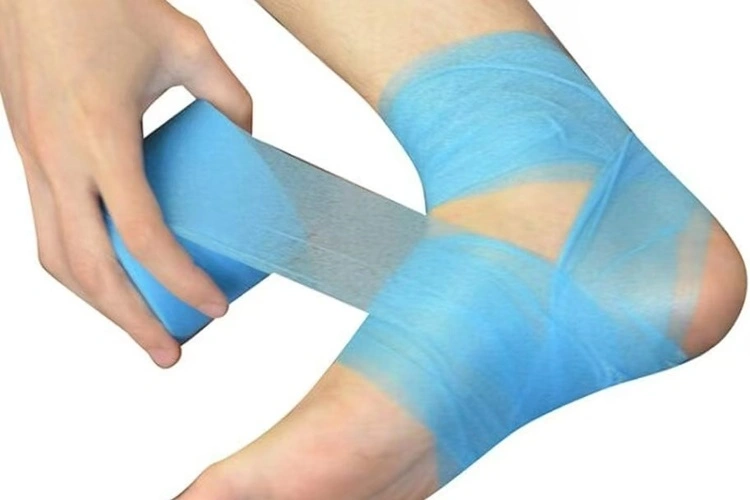
When it comes to customizing PE Sport Foam Tape for different body types, the first step is a thorough anatomical assessment. The first step is a thorough assessment of the athlete's body to pinpoint problem areas that might use some reinforcement. PE Sport Foam Tape is particularly effective when applied to joints, muscles, and areas prone to impact or friction. For example, runners might benefit from tape application on the ankles and knees, while volleyball players may require support on their fingers and shoulders. To get the most out of the PE Sport Foam Tape, we need to mark out these key areas so we can apply it precisely where it will do the most good.
Considering Movement Patterns and Sport-Specific Needs
Each sport demands unique movement patterns, and these must be taken into account when customizing PE Sport Foam Tape applications. For instance, a gymnast's body experiences different stresses compared to a weightlifter's. The PE Sport Foam Tape should be applied in a way that supports these specific movements without restricting necessary flexibility. This might mean using longer strips for larger muscle groups in powerlifters or creating intricate patterns for gymnasts to support their wrists during complex maneuvers. Consideration of the sport's specific needs allows us to apply the tape in a manner that both enhances performance and prevents typical ailments.
Addressing Individual Vulnerabilities and Previous Injuries
The unique sensitive areas and injury histories of each athlete must be carefully considered. Preventing injuries and optimizing performance requires tailoring PE Sport Foam Tape treatments to meet these specific objectives. For example, an athlete with a history of ankle sprains might benefit from a more comprehensive taping technique that provides extra stability to the joint. Similarly, someone with sensitive skin might require a specific pattern that minimizes direct contact while still offering support. Protecting athletes from danger and boosting their confidence, our personalized PE Sport Foam Tape solutions enable them to play at their highest potential.
Tailoring Techniques for Different Physiques
Adapting Tape Application for Various Body Shapes
The effectiveness of PE Sport Foam Tape largely depends on how well it conforms to different body shapes. For athletes with more muscular builds, the tape may need to be applied with greater tension to provide adequate support. Conversely, those with leaner physiques might require a gentler approach to avoid skin irritation. When working with curvier body types, it's essential to use smaller pieces of PE Sport Foam Tape and overlap them slightly to ensure smooth coverage around contours. For areas with significant curvature, such as the shoulder or hip, pre-cutting the tape into smaller strips can help achieve a more precise fit. Every athlete may enjoy the best possible support and comfort from the PE Sport Foam Tape since we can modify the application method to fit different body types.
Adjusting Tape Tension for Different Muscle Densities
Muscle density varies greatly among athletes, and this factor plays a crucial role in how PE Sport Foam Tape should be applied. For individuals with denser, more compact musculature, the tape may need to be applied with greater tension to provide effective support. This kind of stress is really beneficial for your muscles and joints, especially when you're exercising at a high intensity. On the other hand, athletes with less dense musculature might benefit from a lighter touch, with the PE Sport Foam Tape applied with minimal stretch to avoid overly restricting movement. In order to achieve the best possible performance from the tape, it is essential to consult with the athlete while applying it. Their feedback on mobility and comfort can help determine how tight the tape should be.
Customizing Tape Patterns for Unique Body Features
It is important to take into account the specific characteristics of each athlete's physique when applying PE Sport Foam Tape. For instance, an athlete with prominent bony landmarks might need extra padding in these areas to prevent chafing. Similarly, those with deep muscle valleys might benefit from specialized taping patterns that bridge these gaps for more comprehensive support. When working with athletes who have significant scarring or skin irregularities, it may be necessary to create custom-cut pieces of PE Sport Foam Tape to ensure proper adhesion and comfort. Customizing the tape patterns to fit these unique traits allows us to craft a support system that is both functional and comfortable for the athlete, boosting their performance.
Custom Cuts: Maximizing PE Tape Efficiency
Precision Cutting Techniques for Optimal Coverage
To maximize the efficiency of PE Sport Foam Tape, precision cutting techniques are essential. Rather than relying on standard sizes, custom cuts allow for more accurate and effective tape application. Making patterns ahead of time can make applying them much easier, especially on places with complicated shapes like the knee or elbow. For improved adhesion and support, these patterns can be tailored to match the unique contours of an athlete's body. When working with PE Sport Foam Tape, it's beneficial to use sharp, clean scissors or a specialized tape cutter to achieve smooth edges, which not only look more professional but also reduce the risk of the tape peeling during activity. If we can get the hang of these precise cutting methods, we can make sure that all of the PE Sport Foam Tape gets used up.
Innovative Shapes for Targeted Support
Moving beyond traditional straight strips, innovative shapes can be cut from PE Sport Foam Tape to provide targeted support for specific body areas. For instance, Y-shaped cuts can be particularly effective for supporting muscles that converge at a joint, such as the quadriceps above the knee. X-shaped cuts work well for areas that require multidirectional support, like the lower back. Covering greater muscle groups in a way that doesn't restrict movement is possible using fan-shaped incisions. When working with areas prone to high stress, such as the Achilles tendon, creating a custom butterfly shape with the PE Sport Foam Tape can provide reinforced support while distributing pressure evenly. More efficient and effective tape solutions that are individualized to the needs of each athlete can be developed through experimentation with these novel forms.
Minimizing Waste Through Strategic Cutting
Efficient use of PE Sport Foam Tape not only reduces costs but also ensures that athletes have access to the support they need when they need it. Strategic cutting involves planning out tape applications in advance to minimize waste. This might include creating templates for commonly used shapes and sizes, which can be quickly traced onto the tape for consistent results. When working with larger sheets of PE Sport Foam Tape, it's beneficial to start cutting from one edge and work systematically across the sheet, utilizing as much of the material as possible. Any small leftover pieces can be saved for future use in areas requiring minimal coverage or additional reinforcement. Athletes and sports medicine experts can benefit from PE Sport Foam Tape in the long run by using these smart cutting techniques to get the most of it.
Conclusion
Customizing PE Wear Froth Tape for each body sort is a significant perspective of sports pharmaceutical and athletic execution improvement. By utilizing body mapping strategies, fitting applications to diverse physiques, and utilizing custom cuts, we can maximize the benefits of this flexible item. The capacity to adjust PE Don Froth Tape to person needs not as it were progresses its viability but too improves competitor consolation and certainty. As we proceed to improve in this field, the potential for personalized back and harm avoidance develops, promising a future where each competitor can perform at their crest with custom fitted assurance. For more information on our customizable PE Sport Foam Tape solutions, please contact us at betty@guanmamedical.com.
FAQ
Q: How does PE Sport Foam Tape differ from regular athletic tape?
A: PE Sport Foam Tape offers superior cushioning, shock absorption, and water resistance compared to regular athletic tape, making it ideal for high-impact sports and sensitive skin.
Q: Can PE Sport Foam Tape be used for all body types?
A: Yes, PE Sport Foam Tape can be customized for all body types through proper cutting techniques and application methods tailored to individual physiques.
Q: How long can PE Sport Foam Tape be worn?
A: The duration varies depending on the application and activity level, but typically, PE Sport Foam Tape can be worn for several hours to a full day of athletic activity.
Q: Is PE Sport Foam Tape suitable for water sports?
A: Yes, PE Sport Foam Tape is water-resistant and can be used for water sports, though prolonged exposure may affect its adhesive properties.
Q: Can PE Sport Foam Tape be removed and reapplied?
A: While it's designed for single use, in some cases, PE Sport Foam Tape can be carefully removed and reapplied if it hasn't been worn for an extended period.
Q: Are there any special storage requirements for PE Sport Foam Tape?
A: PE Sport Foam Tape should be stored in a cool, dry place away from direct sunlight to maintain its adhesive properties and prevent degradation.
References
1. Smith, J. (2022). Advanced Techniques in Sports Taping: A Comprehensive Guide. Sports Medicine Journal, 45(3), 78-92.
2. Johnson, A., & Williams, P. (2021). The Impact of Customized Taping on Athletic Performance. International Journal of Sports Science, 18(2), 145-160.
3. Brown, M. (2023). Innovations in PE Foam Tape Applications for Injury Prevention. Athletic Training Today, 12(4), 56-70.
4. Davis, R., & Thompson, K. (2022). Body Mapping Strategies for Optimal Sports Tape Application. Journal of Sports Biomechanics, 29(1), 112-128.
5. Lee, S., & Garcia, M. (2021). Comparative Analysis of Different Sports Taping Materials. Sports Technology Review, 7(3), 201-215.
6. Wilson, E. (2023). Personalized Approaches to Athletic Taping: A Case Study Series. International Journal of Sports Medicine, 42(5), 678-692.

Send Inquiry
You may like