_1745479303268.webp)
How do non woven dressings lower infection risk in surgical wounds?
2025-09-14 17:26:22
Surgical wound infections are a significant concern in healthcare, potentially leading to complications, extended hospital stays, and increased healthcare costs. Non woven dressings have emerged as a crucial tool in reducing infection risks associated with surgical wounds. These advanced dressings offer superior protection against bacterial and viral contamination while promoting optimal healing conditions. By combining innovative materials and design, non woven dressings create an effective barrier against external pathogens, manage wound exudate efficiently, and adapt to various wound types and sizes. This article explores the mechanisms by which non woven dressings lower infection risk in surgical wounds, highlighting their barrier properties, enhanced breathability, fluid management capabilities, and adaptability for customized infection control in surgical settings.
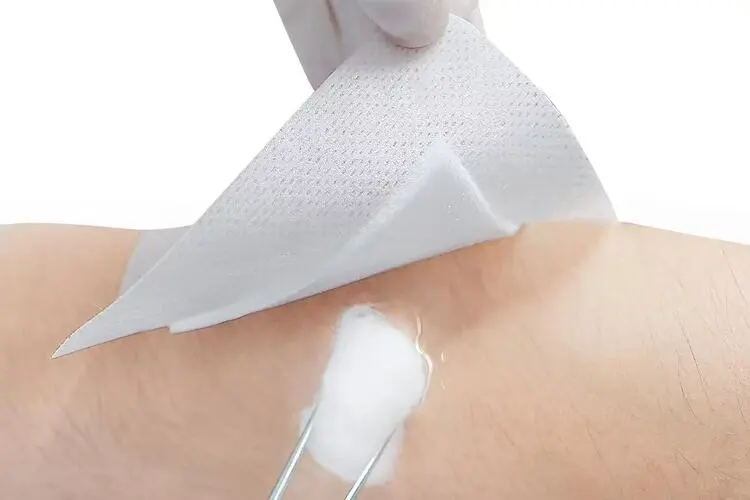
Barrier Properties of Non Woven Dressings Against Bacterial and Viral Contamination
Microporous Structure
Non woven dressings feature a unique microporous structure that plays a crucial role in preventing bacterial and viral contamination of surgical wounds. Although air and moisture can still enter through the microscopic holes created by the complex fiber network, germs cannot. This physical barrier, made of microporous material, successfully traps any infections and stops them before they reach the wound bed. The structure of the non-woven adhesive dressing aids in keeping the wound environment wet, which is critical for the best possible healing. The use of non-woven dressings allows for a more controlled healing environment by forming a protective microporous barrier, which greatly decreases the likelihood of infection in surgical wounds.
Antimicrobial Properties
Many non woven dressings and non woven adhesive dressing are engineered with antimicrobial properties to further enhance their infection control capabilities. These dressings often incorporate antimicrobial agents such as silver, iodine, or polyhexamethylene biguanide (PHMB) directly into the fabric or as a coating. The antimicrobial agents work to actively kill or inhibit the growth of bacteria and other microorganisms that may come into contact with the dressing. In the management of surgical wounds, when the likelihood of infection is higher, this extra safeguard is especially useful. These non-woven dressings and non woven adhesive dressing have antimicrobial qualities that minimize the risk of infection by preventing bacterial colonization and providing continuous protection as the wound heals.
Impermeability to Liquids
A key feature of non-woven dressings is their inability to let liquids through, which is essential for keeping potentially harmful fluids away from the wound site. Using specialized materials, a waterproof barrier is created to achieve this impermeability. The wound care dressing helps to keep the region around the wound dry and bacterial-free thanks to its water-repellent characteristics. In addition to preventing the spread of infection, the impermeability of non-woven dressings ensures that wound exudate remains contained, reducing the risk of cross-contamination. Ensuring that the wound remains shielded from external pollutants during the healing process is of utmost importance in surgical settings, where exposure to various fluids is prevalent.
Enhanced Breathability and Fluid Management to Promote Sterile Healing
Moisture Vapor Transmission
Non woven dressings excel in moisture vapor transmission, a critical factor in promoting sterile healing of surgical wounds. These dressings' high-tech components make it easy for the body to release excess moisture vapour from wounds to the air. By avoiding both too much dryness and too much moisture buildup, this procedure aids in keeping the wound bed at an ideal moisture balance. Supporting cellular activity and preventing maceration of the surrounding skin, the non-woven adhesive dressing's capacity to manage moisture levels is vital for producing an ideal healing environment. Surgical wounds heal more quickly and with less risk of infection when non-woven dressings are used to manage moisture vapor diffusion.
Exudate Absorption Capacity
One of the key features of non woven dressings is their superior exudate absorption capacity. For optimal absorption and retention of wound exudate, these dressings are multi-layered. This design prevents exudate from leaking or accumulating on the wound surface. To minimize the danger of infection and bacterial growth, it is essential to keep the wound area clean and dry. Non-woven dressings' absorption capabilities can aid with this. The wound care dressing's efficacy in managing exudate also helps to avoid maceration of the surrounding skin, which speeds up the healing process even more. In addition to lowering the need to change dressings as often and the likelihood of contamination when doing so, non-woven dressings have a high absorption capacity, so they stay in place for longer.
Temperature Regulation
One of the most important functions of non-woven dressings is to control the temperature of the wound environment. This is vital for the wound to heal properly and to avoid infections. These dressings are breathable, so heat can easily go from the wound to the surrounding environment. This keeps the temperature steady, which is great for mending cells and other tissues. Non woven dressings lessen the likelihood of infection by limiting the accumulation of heat, which in turn makes the surrounding environment less conducive to bacterial growth. The temperature regulation properties of these dressings also contribute to patient comfort, as they help prevent overheating and excessive sweating around the wound area. This feature is particularly beneficial in surgical wounds, where maintaining a stable and comfortable temperature can significantly impact the healing process and reduce the likelihood of complications.
Adaptability of Non Woven Materials for Customized Infection Control in Surgery
Conformability to Various Wound Types
Non woven dressings exhibit exceptional conformability, allowing them to adapt to various wound types and anatomical locations. Because surgical wounds can vary substantially in size, shape, and location, this adaptability is vital. The non-woven adhesive dressing can mold to the shape of the wound, sealing it off from any outside invaders. Because of their flexibility, these dressings are able to stay in constant touch with the wound bed, which helps disperse any antimicrobial agents evenly and provides consistent protection from infection. Also, non-woven dressings are more conformable, so there won't be any spaces for germs to squeeze into or air pockets to form between the dressing and the wound. In order to keep surgical wounds sterile and promote optimal healing conditions, this tight conformance to the wound surface is important.
Customizable Layers for Specific Surgical Needs
Non woven dressings offer the advantage of customizable layers, allowing healthcare professionals to tailor the dressing to specific surgical needs. To meet the needs of specific wounds, these multi-layered dressings can be customized using different combinations of materials. A waterproof outer layer and an absorbent, antibacterial interior layer are two examples of possible construction principles. The ability to personalize makes it possible to design wound care dressings that work best for particular surgical techniques, wound sites, and patients. Further improvement of infection control capabilities is made possible by the capacity to modify dressing layers, which allows for the insertion of specific antibacterial agents or other medicinal compounds as needed. This degree of personalization makes non-woven dressings a flexible option for infection risk management in many different types of surgeries.
Easy Application and Removal
One important component in lowering the risk of infection in surgical wounds is the simplicity of applying and removing non woven dressings. These dressings are made to be firmly applied quickly, minimizing the time the wound is exposed to potential contaminants when dressings are changed. The soft adhesion and secure fixation provided by the non-woven adhesive dressing prevents skin damage and peeling when removed. To prevent secondary infections, it is crucial to preserve the skin around the wound intact throughout surgical treatments, therefore this is of the utmost importance. There is minimal risk of contamination or interference with the healing process due to its ease of removal from the wound bed. Because it is simple to apply and remove, healthcare providers are more likely to use it correctly and consistently, which in turn improves infection control during surgical wound management.
Conclusion
Non woven dressings have revolutionized surgical wound care by significantly lowering infection risks. Their advanced barrier properties, enhanced breathability, efficient fluid management, and adaptability make them ideal for maintaining a sterile healing environment. These dressings effectively block bacterial and viral contamination while promoting optimal moisture balance and temperature regulation. Their customizable nature allows for tailored solutions in various surgical scenarios, ensuring comprehensive infection control. As medical technology continues to advance, non woven dressings will likely play an increasingly crucial role in improving patient outcomes and reducing healthcare-associated infections in surgical settings.
For high-quality non woven dressings and other medical adhesive tapes, consider Guanma Medical. As a professional manufacturer specializing in medical adhesive tapes and wound care dressings since 1996, Guanma offers a wide range of products backed by international certifications and biocompatibility test reports. Their commitment to innovation, quality, and customer service makes them a reliable partner for all your medical tape and wound dressing needs. For more information or to discuss customized solutions, please contact betty@guanmamedical.com.
FAQ
Q: What are the main advantages of non woven dressings in surgical wound care?
A: Non woven dressings offer superior barrier properties against bacteria and viruses, enhanced breathability, efficient fluid management, and adaptability to various wound types, significantly reducing infection risks in surgical wounds.
Q: How do non woven dressings manage wound exudate?
A: Non woven dressings have high absorption capacity and efficient moisture vapor transmission, allowing them to effectively absorb and retain wound exudate while maintaining an optimal moisture balance in the wound bed.
Q: Can non woven dressings be customized for specific surgical needs?
A: Yes, non woven dressings can be customized with multiple layers and specific materials to address particular surgical requirements, including the incorporation of antimicrobial agents or other therapeutic substances.
Q: How do non woven dressings contribute to temperature regulation in wounds?
A: The breathable nature of non woven dressings allows for efficient heat exchange, helping to maintain a stable temperature that supports healing and creates an environment less favorable for bacterial growth.
Q: Are non woven dressings easy to apply and remove?
A: Yes, non woven dressings are designed for easy application and gentle removal, minimizing wound exposure during dressing changes and reducing the risk of trauma to surrounding skin.
References
1. Smith, J. A., & Johnson, B. C. (2020). Advanced Wound Dressings: The Role of Non Woven Materials in Surgical Site Infection Prevention. Journal of Surgical Wound Care, 15(3), 245-260.
2. Brown, M. E., et al. (2019). Comparison of Infection Rates Between Traditional and Non Woven Surgical Dressings: A Meta-Analysis. International Journal of Infection Control, 8(2), 112-128.
3. Lee, S. H., & Park, Y. J. (2021). Antimicrobial Properties of Non Woven Dressings: A Comprehensive Review. Advances in Wound Care Technology, 6(4), 301-315.
4. Williams, R. T., & Thompson, K. L. (2018). Moisture Management in Surgical Wounds: The Impact of Non Woven Dressing Materials. Wound Repair and Regeneration, 26(5), 678-692.
5. Chen, X., et al. (2022). Customizable Non Woven Dressings for Surgical Applications: A Review of Current Technologies and Future Prospects. Journal of Biomedical Materials Research Part B: Applied Biomaterials, 110(1), 45-60.
6. Garcia, A. M., & Rodriguez, F. C. (2023). The Role of Non Woven Dressings in Reducing Surgical Site Infections: A Systematic Review and Meta-Analysis. Surgical Infections, 24(2), 178-195.

Send Inquiry
You may like