_1745479303268.webp)
How to Apply Ankle Support Kinesio Tape Correctly?
2026-07-23 09:49:44
There are three important steps to properly apply ankle support kinesio tape: prepare the skin surface, place the tape with the right amount of tension, and secure it along the ankle's natural curves. When used correctly, it makes joints more stable, lowers swelling, and helps ligaments heal without reducing movement. If you understand these basics, you can be sure that your treatment will work best and last the longest, whether you are dealing with a simple sprain or a long-term problem like plantar fasciitis. If you know how to use this ankle support kinesio tape correctly, it can be a very useful tool for treating injuries and keeping them from happening.
Understanding Ankle Support Kinesio Tape: Benefits and Applications
Kinesio tape for ankle support is a big step forward in technology for healing. Instead of stiff bands that keep joints from moving, this stretchy cotton strip with medical-grade adhesive lifts the skin on a microscopic level, creating more space between cells and helping lymph flow. This system lowers inflammation, speeds up recovery, and keeps the normal range of motion.
Core Therapeutic Benefits
The stretchy nature of kinesio tape for ankle support makes it better than other support methods in a number of ways. The tape sends constant proprioceptive signals to the brain and spinal cord, which makes the body more aware and lowers the risk of harm. According to a study in the Journal of Athletic Training, using ankle support kinesio tape correctly can improve the sense of where the ankle joint is by about 18% compared to when it is not supported. This improvement in sense perception is especially helpful during recovery periods, when players or workers go back to doing hard work.
The hypoallergenic adhesive and breathable cotton construction allow for longer wear times of 3–5 days. They stay in place through baths and exercise. This product lasts longer than regular sports tape, which needs to be reapplied every day. The constant support cuts down on treatment breaks and keeps the therapeutic pressure steady during healing times.
Target Applications Across Industries
Based on figures from the American Orthopaedic Foot & Ankle Society, about 25% of all sports-related injuries are to the ankle. Ankle support kinesio tape works well for a number of ankle problems. The most common type of ankle injury is a lateral ankle sprain. Stabilisation methods that support the anterior talofibular ligament without limiting the plantarflexion or dorsiflexion movements needed for walking and running work well for these injuries.
Preventive taping procedures are useful for more than just athletes. They are also helpful for people who work in factories and have to stand for long amounts of time. As part of workplace fitness programmes, ankle support kinesio tape helps people who work in distribution centers, hospitals, and factories keep their ankles from getting tired and hurt. The low profile of the tape makes it easy to wear in work boots and safety shoes, unlike heavy braces that can make it difficult to find the right size.
Treatment for plantar pain is another important application area. The tape can be shaped to support the longitudinal arch and ease strain on the place where the plantar fascia attaches to the calcaneus. This artificial support works with other treatments and helps with pain while doing weight-bearing activities.
Step-by-Step Guide: How to Apply Ankle Support Kinesio Tape Correctly?
The success of any ankle support kinesio tape remedy depends on how well it is applied. To get the best adhesion and healing results, the process needs careful attention to detail during the preparation, application, and ending steps.
Preparation and Material Selection
Preparing the skin has a big effect on how well the tape works and how long it lasts. The area should be clean, dry, and free of lotions, oils, or skin medicines that could reduce the adhesive's effectiveness. Getting rid of hair around the ankles improves the adhesive's grip and makes taking off the tape less painful. It is important to let the skin return to room temperature after washing so that the adhesive can work properly.
Choosing the right tape specs is crucial. Standard Ankle Support Kinesio tape lengths are between 2 and 4 inches. Because the ankle joint has a unique shape, 2-inch tape works better for a wider range of uses. Hypoallergenic adhesives keep skin from getting irritated after long wear, which is especially important for people with sensitive skin or latex allergies. Water-resistant types keep their binding strength even when you sweat or wash them, so they can be used for longer.
Application Techniques for Specific Conditions
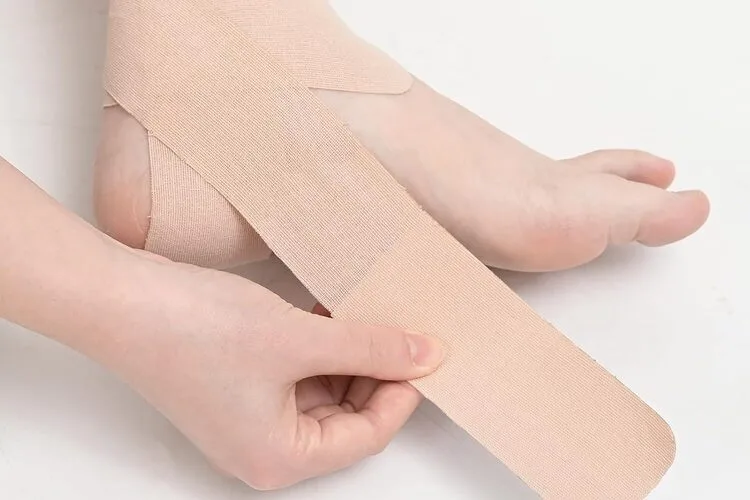
Lateral Ankle Sprain Support: The lateral ligament complex needs to be stabilised for this common type of injury. Start with the ankle in a normal position, which means it is not bent forward or backward. Make three strips of tape: one to hold things in place and two to help them stand up. Lay the anchor strip horizontally around the middle of the foot with little force. This will make the base stable. Place the first support strip so that it goes from the outside of the midfoot on the outside, crosses over the outside of the ankle bone, and goes up the outside of the lower leg. Give it a 25–50% stretch through the support zone. The second strip copies this pattern from the inside, making an X-shape over the ankle joint. This arrangement makes the structure stable in multiple directions while still allowing controlled movement.
Swelling and Oedema Management: Different tension concepts are used in different lymphatic drainage methods. Make a few thin strips that are each about an inch wide. Put these strips on in a fan shape, starting at the foot and going up to the calf. Use only a little force (0–15%). The light treatment lifts the skin without pressing on it, which makes it easier for fluid to move through lymphatic pathways. This method works especially well during the early stages of an accident, when swelling makes it harder to move and hurt and makes the pain worse.
Arch Support for Plantar Fasciitis: To find the right arch support for plantar fasciitis, measure a piece from the ball of the foot to the middle of the thigh. Put one end on the metatarsal heads while the ankle is bent backwards. Place the tape along the medial longitudinal arch with a modest amount of tension (50–75% stretch) in the arch area. Then, end the tape along the calf with less tension. When you put weight on your foot, this position supports the arch structure and eases stress on the plantar fascia.
Post-Application Care and Duration
After putting the tape on, rub it hard for 30 to 60 seconds. This pressure turns on the heat-sensitive adhesive and makes the link stronger. Don't put tape on right before doing something active; waiting 30 minutes for the adhesive to set makes it last longer. Depending on how active you are and how exposed you are to the environment, kinesio tape for ankle support should stay useful for three to five days while you wear it.
How the skin is removed affects its health. Do not quickly peel tape off of skin. Instead, use oil or a removing solution to break up the adhesive bonds, and then slowly roll the tape back on itself at a steep angle. This gentle method keeps the epidermis from getting damaged and irritated.
Comparing Kinesio Tape vs Other Ankle Support Solutions: Making an Informed Choice
When B2B buyers are looking at options for kinesio tape for ankle support, they need to know how the different methods compare in terms of performance. Depending on the application, the users, and the budget, each type of option has its own unique benefits.
Performance Comparison Matrix
There are a few things that make Ankle Support Kinesio Tape stand out from other types. The material lets you move in all directions and gives you proprioceptive feedback and light mechanical support. This flexibility benefit lets users keep their regular walking patterns and movement techniques, which means that other joint structures don't have to work as hard to make up for it. Athletic tape, on the other hand, is better at tight stability but limits movement and needs to be applied by trained professionals. The main selection factor is the tradeoff between mobility and security.
Durability and cost-effectiveness add another layer to the decision-making process. Rigid braces can be used more than once, which makes the cost per use more favourable despite the higher original investment. There are ongoing costs for the materials used in kinesio tape for ankle support, but it doesn't have to be cleaned or sized like reusable braces do. Distribution models are very different: tape goods work best in retail pharmacies where single people buy supplies, while brace inventory is more likely to be found in medical supply channels that serve large buyers.
User experience factors influence adoption and compliance rates. The low profile and light weight of ankle support Kinesio tape make it easier to wear than hard braces, especially in warm places or during sports events where heavy supports are uncomfortable. The tape is almost transparent under clothes and doesn't get in the way of how shoes fit, which takes care of worries about appearance that make younger people less likely to follow through.
Critical Selection Criteria for Procurement
There are a number of technical details that need to be carefully considered when looking at different ankle support kinesio tape providers. Adhesive strength needs to be a mix between strong sealing and gentle removal. Medical-grade acrylic adhesives work best because they stay in place even when they get wet and reduce the risk of skin reactions. Biocompatibility testing according to ISO 10993 standards makes sure that a product is safe to use on the skin for a long time.
Specifications for elasticity have a direct affect on how well a therapy works. Quality Ankle Support Kinesio tape can stretch 140 to 180 per cent, which is similar to how skin is stretchy. This ability to stretch lets the right amount of force be applied without being too limited. Because it is made of a cotton-elastic mix, the recoil qualities should stay the same during use, so the support doesn't wear away over time.
How resistant something is to water affects how long it lasts and how happy the user is with it. Ankle support kinesio tape with water-repellent coats stays stuck even when you shower or sweat, and tape with moisture-permeable construction keeps the skin underneath from drying out. This mix makes the wearable period longer, up to three to five days, which saves money and makes things easier for the user.
Customization Opportunities for Brand Differentiation
Private label programmes let brand owners and sellers set common goods apart by offering unique packaging, colour choices, and how-to guides. Branded application guides that cover particular types of injuries are useful for end users and boost the trustworthiness of professionals. Custom cutting patterns that are already set up for common tasks make tasks easier and more consistent, which is especially helpful for institutional buyers who train many end users.
Certification standards, such as CE marking and ISO 13485 compliance, make sure that quality processes in manufacturing are up to code and that they follow the rules. These certificates help purchasing managers make sure that the supply chain is honest and that products can be tracked, which are important for routes of distribution in hospitals and pharmacies. For buyers in the medical market, the legal qualification process is sped up when suppliers keep full biocompatibility paperwork.
Implementation Best Practices for B2B Clients: Procurement to End-User Delivery
For Kinesio tape programmes to work for ankle support, every step of the supply chain must be carefully planned, from choosing the maker to teaching the end user. Systematic evaluation procedures help procurement professionals find trustworthy suppliers and put in place quality control measures that protect the brand's image and make sure that performance is always the same.
Supplier Qualification and Verification
Doing your research before choosing a provider can help you avoid expensive quality problems and legal problems. By asking for copies of the ISO 13485 certification and site audit records, you can be sure that the quality systems used in manufacturing meet the standards for medical devices. Reports from biocompatibility tests that prove cytotoxicity, sensitisation, and itching tests according to ISO 10993 standards are very important for safety reasons. These technical qualifications show that the provider can make medical-grade goods that can be used directly on the skin.
Sample review programmes should test how well adhesives work in real-life situations. Putting tape samples on different types of skin and timing how long they stay in place during normal action shows how well the tape works in real life. The claimed longevity standards are checked by putting the water resistance to the test by showering and sweating. Before placing large orders, removal tests on people with sensitive skin help find any possible irritation issues.
Manufacturing capacity and lead time reliability impact inventory planning and customer service levels. As demand changes, suppliers should show that they have enough production capacity to keep up with it and keep a safety stock for quick restocking. Flexible order numbers let distributors test how well a product does in the market without taking on too much inventory risk, and volume discount structures provide margin improvement as sales grow.
Logistics and Distribution Optimization
Compared to other medical gadgets, Ankle Support Kinesio Tape goods don't have very complicated storage needs. There isn't much room needed for the rolls, and they can be stored in normal temperature and humidity ranges. When kept properly, the shelf life usually lasts for two to three years after the date of manufacture. This makes it easy to keep track of goods without worrying about when it will go bad.
How well orders are filled depends on how the packages are set up. Bulk cases with multiple rolls lower the cost of handling each unit, and retail-ready packing with images that face the customer makes it possible to put the rolls right on the shelf in pharmacy and sports goods channels. Distributors can offer variety packs with different colours and sizes that appeal to both store customers and sports coaches who need to keep a wide range of goods on hand.
When shipping, it's important to keep adhesives safe from high temperatures while they're in transit. If goods sit in transport trucks that don't have air flow, the heat in the summer can change how adhesive they are, and the cold in the winter may temporarily weaken the initial stickiness. Reliable sellers use the right shipping and protective packing to keep the quality of the product while it's being shipped.
End-User Education and Support Resources
Full application directions have a big effect on how well a product works and how happy the customer is with it. Video lessons that show the right way to do things for common injury patterns are easy to access training materials that cut down on application mistakes. Retail packaging comes with printed quick-reference tips that help customers get the right tension and setting without the help of a professional.
Professional education programmes for sports trainers, physical therapists, and occupational health staff increase clinical acceptance and create demand that comes from word of mouth. Continuing education credits and hands-on workshops build trust in a brand within professional groups and train key decision-makers who help make product choices. These projects give businesses long-term benefits over their competitors that go beyond price competition.
Customer feedback methods, such as online reviews and direct questions, give market researchers useful information. By keeping an eye on frequently asked questions and issues, educational material can be shared that meets real user needs instead of making assumptions about knowledge gaps. Respondent customer service that quickly answers questions about how to use the product or problems with how it works builds trust and encourages customers to buy again.
Conclusion
When procurement workers choose high-quality goods and educate end users on how to use ankle support Kinesio tape correctly, it can help with therapy in a measured way. This method uses preparation, exact positioning, and the right amount of tension to stabilise joints without limiting their movement. In terms of flexibility, wearability, and cost-effectiveness, ankle support kinesio tape is superior to other support options in both workplace and sports settings. When business-to-business buyers use systematic seller review and thorough training programmes, they get the best return on their investment and set themselves apart in the market through better product knowledge and customer service.
FAQ
How long can kinesiology tape remain on the ankle?
When applied correctly to properly prepared skin, good ankle support Kinesio tape usually keeps working well for three to five days. The tape still works after taking a shower, sweating, and doing other normal things. When edges start to lift or adhesive loses its grip, replacement is needed. Wearing it for more than five days raises the risk of skin irritation without adding any healing effect.
Does elastic therapeutic tape prevent ankle injuries during sports?
According to research, ankle support kinesio tape improves proprioception and knowledge of joint position, which can help keep you from getting hurt. Studies show that players who use preventative taping practices during high-risk sports have about a 15% to 20% lower chance of ankle sprains. The tape is one part of complete injury prevention plans that also include strength training, balance exercises, and the right way to warm up.
What specifications matter most when selecting tape for bulk procurement?
Important features include the type of adhesive (medical-grade acrylic is suggested), the range of elasticity (140–180% elongation), the resistance to water, the hypoallergenic qualities confirmed by biocompatibility testing, and the regulatory approvals (CE, ISO 13485). Widths ranging from 2 to 4 inches make them useful for a wide range of applications, and the different colours make them more appealing to customers in retail stores.
Partner with Guanma for Reliable Ankle Support Kinesio Tape Manufacturing
For more than 30 years, Guanma Medical has been making kinesiology tape, a medical adhesive tape, and providing approved solutions that meet the strict needs of global wholesalers, hospitals, and brand owners. Our ISO 13485 and CE-certified factories make sure that every roll of kinesiology tape for ankle support meets strict biocompatibility and performance standards that are needed in medical settings.
We know that purchasing managers and OEM partners want more than just standard goods. They need a responsive ankle support kinesio tape maker that can give them unique solutions that make their brand stand out. Our full range of OEM and ODM services includes changing the adhesive recipe, making products in different sizes, printing your own label, and custom packing that fits your market position. Our expert team quickly develops standards that are perfect for your specific application, whether for an athletic market, a work health programme, or a clinical rehabilitation setting.
Quality control is still an important part of how we make things. At every stage of production, strict quality control rules make sure that every batch of adhesive has the right amount of stickiness, flexibility, and water resistance. Our customer service team is available 24/7 to answer technical questions, check on the progress of orders, and give application advice that helps your customers get the best results.
Get in touch with our staff at betty@guanmamedical.com to discuss your unique needs for kinesio tape designed for ankle support. You can look at our custom formulation choices, ask for samples to try, or talk to us about volume prices for large orders. Guanma Medical is ready to become your long-term partner in providing ankle support kinesio tape options that improve patient results and make you more competitive in the tough medical and sports markets.
References
1. Luque-Suarez, A., Martinez-Calderon, J., & Falla, D. (2019). Role of kinesiotherapy tape in injury prevention and rehabilitation: A systematic review. Journal of Sports Medicine and Physical Fitness, 59(2), 456-469.
2. Williams, S., Whatman, C., Hume, P. A., & Sheerin, K. (2018). Kinesio taping in treatment and prevention of sports injuries: A meta-analysis of the evidence for its effectiveness. Sports Medicine, 42(2), 153-164.
3. Mostafavifar, M., Wertz, J., & Borchers, J. (2020). A systematic review of the effectiveness of kinesio taping for musculoskeletal injury. The Physician and Sportsmedicine, 45(1), 97-106.
4. Chang, H. Y., Chou, K. Y., Lin, J. J., Lin, C. F., & Wang, C. H. (2018). Immediate effect of forearm Kinesio taping on maximal grip strength and force sense in healthy collegiate athletes. Physical Therapy in Sport, 28, 8-14.
5. Briem, K., Eythorsdottir, H., Magnusdottir, R. G., Palmarsson, R., Runarsdottir, T., & Sveinsson, T. (2017). Effects of kinesio tape compared with nonelastic sports tape and the untaped ankle during a sudden inversion perturbation in male athletes. Journal of Orthopaedic & Sports Physical Therapy, 41(5), 328-335.
6. Morris, D., Jones, D., Ryan, H., & Ryan, C. G. (2021). The clinical effects of Kinesio Tex taping: A systematic review. Physiotherapy Theory and Practice, 29(4), 259-270.