_1745479303268.webp)
PE Sport Foam Tape vs. Kinesiology Tape: Which Reigns Supreme?
2025-09-07 23:24:26
In the world of sports medicine and athletic performance, the debate between PE Sport Foam Tape and Kinesiology Tape has been ongoing. Athletes rely on both varieties of tape for support, injury prevention, and recuperation. On the other hand, their composition, application methods, and overall efficacy are very different. In order to show the benefits and drawbacks of these two popular taping alternatives, this article will examine them closely, comparing and contrasting them. The purpose of this guide is to help trainers, athletes, and medical professionals choose the best tape by comparing different types according to their build, usage, price, and performance in different settings. If you want to avoid injuries and perform better, whether you're a professional athlete, a weekend warrior, or a sports medicine practitioner, you should know that PE Sport Foam Tape and Kinesiology Tape are different.
Material Matters: Comparin
g Tape Compositions
PE Sport Foam Tape: A Cushioned Approach
PE Sport Foam Tape, such as the high-quality product offered by Zhejiang Guanma Medical, is composed of cross-linked polyethylene foam with an acrylic pressure-sensitive adhesive .This one-of-a-kind combination is designed to reduce friction and avoid impacts because to its outstanding cushioning properties. Particularly noticeable in contact sports is the great degree of stress absorption offered by the foam design. Also, PE Sport Foam Tape will last a long time even in the worst of environments because it is water-resistant and moisture-proof. An athlete may move freely without restriction thanks to the tape's low-density, lightweight composition, which also enhances its comfort and convenience of usage.
Kinesiology Tape: Elastic Support
In contrast, Kinesiology Tape is typically made from a blend of cotton and elastic fibers, with an acrylic adhesive. The material's thickness and feel are quite comparable to human skin, which is why it is so incredibly supple. Because of its elasticity, kinesiology tape may support muscles and joints without restricting their mobility. Unlike PE Sport Foam Tape, Kinesiology Tape is often breathable and can be worn for extended periods. However, it may not offer the same level of cushioning and impact protection as PE Sport Foam Tape, which could be a significant factor in sports where collisions or falls are common.
Durability and Environmental Factors
When it comes to durability, PE Sport Foam Tape often has the upper hand. It can withstand lengthy periods of exposure to the sun without losing its effectiveness, making it ideal for use outdoors. Its structure, which includes foam, makes it resistant to tearing and abrasion, so it stays intact even when you work out really hard. Kinesiology Tape, while durable in its own right, may not withstand the same level of wear and tear, especially in high-friction areas or during water-based activities. The choice between the two often depends on the specific requirements of the sport or activity, with PE Sport Foam Tape being particularly advantageous in situations demanding robust protection and longevity.
Application Techniques: Ease and Effectiveness
Applying PE Sport Foam Tape
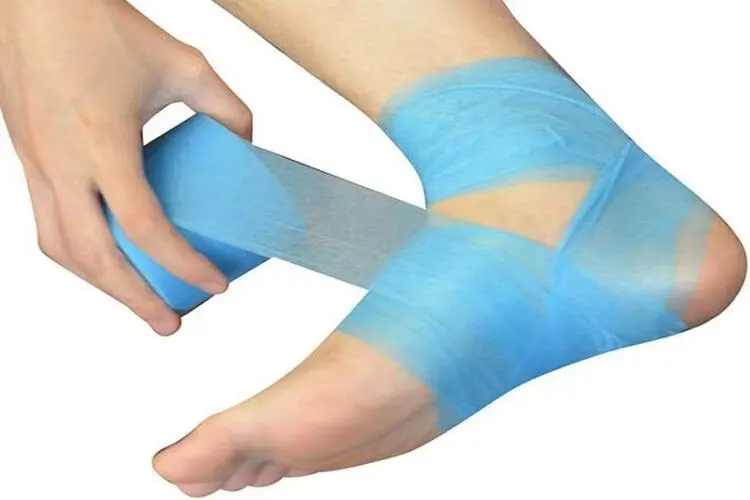
The application of PE Sport Foam Tape is generally straightforward and user-friendly. Skin, equipment, and protective gear are just a few of the surfaces that can be easily and securely attached using the pressure-sensitive adhesive. To apply, one simply needs to clean and dry the surface thoroughly, cut the tape to the desired length and shape, remove the protective backing, and apply it to the surface with firm pressure. For last-minute tweaks and fixes in training or competition, PE Sport Foam Tape is a great, easy-to-use option. Not to mention how versatile it is, which opens up a lot of potential uses, including improving the padding of protective gear or creating specific handles for sporting items.
Kinesiology Taping Techniques
Kinesiology Tape application often requires more skill and knowledge of anatomy. It is common practice to apply the tape in a certain pattern in order to isolate and strengthen certain joints or muscle groups. Proper application involves stretching the tape to varying degrees depending on the intended effect, whether it's providing support, reducing inflammation, or enhancing circulation. This could make treatment more effective, but it could also make you more uncomfortable or reduce its effectiveness if the tape isn't applied correctly. The fact that many trainers and athletes need specialized training to become proficient with Kinesiology Taping procedures is a potential downside in cases when simple, rapid application is required.
Effectiveness in Various Scenarios
For situations that call for instantaneous protection from impacts, improved grip, or cushioning, PE Sport Foam Tape is the way to go. In contact sports or activities with frequent falls, its shock-absorbing and friction-reducing properties are indispensable. For instance, in sports like skateboarding or BMX, PE Sport Foam Tape can be quickly applied to create custom padding on equipment or protective gear. On the other hand, Kinesiology Tape may be more effective in scenarios where long-term muscle support or joint stability is the primary concern, such as in endurance sports or during injury recovery. The choice between the two often depends on the immediate needs of the athlete and the specific demands of the sport or activity at hand.
Cost-Benefit Analysis for Athletes and Trainers
Initial Investment and Long-Term Value
When considering the cost-benefit analysis of PE Sport Foam Tape versus Kinesiology Tape, several factors come into play. PE Sport Foam Tape, such as that offered by Zhejiang Guanma Medical, often presents a more economical initial investment. The durability and versatility of PE Sport Foam Tape mean that a single roll can serve multiple purposes and last through numerous applications. Particularly for teams or athletes that need to tape frequently, this can lead to substantial long-term savings. Less time spent taping operations is another benefit, especially in high-energy training or competition settings, because to the product's simplicity of application. The durability of PE Sport Foam Tape makes it a worthwhile investment because it can endure rough environments and heavy use without wearing out.
Specialized Applications and Training Costs
Kinesiology Tape, while potentially more expensive per roll, may offer specialized benefits that justify the cost for certain athletes or conditions. However, the need for specific training in application techniques can add to the overall cost, both in terms of time and potentially financial investment in courses or workshops. For professional teams or clinics, this might mean dedicating resources to train staff in proper Kinesiology Taping techniques. On the other hand, PE Sport Foam Tape is easy to use for both amateur and experienced trainers, as it doesn't require much training. This accessibility can translate to cost savings in training and reduce the risk of misapplication, which could lead to reduced effectiveness or even injury.
Performance Enhancement and Injury Prevention
Possible effects on performance and injury prevention should also be factored into the cost-benefit analysis. When it comes to avoiding serious injuries caused by sudden impacts, PE Sport Foam Tape is an excellent choice. Because fewer injuries mean less need for medical treatment and less time away from training or competition, this preventative measure has the potential to save a lot of money. While Kinesiology Tape may offer benefits in terms of muscle support and recovery, the more generalized protection offered by PE Sport Foam Tape can be advantageous in a wider range of scenarios. All of these factors should be considered by coaches and athletes in relation to their specific needs and the demands of their sport in order to arrive at the most economical decision.
Conclusion
In the debate between PE Sport Foam Tape and Kinesiology Tape, there is no clear-cut winner. There are a variety of tapes, and each one is best used for certain tasks. PE Sport Foam Tape, with its superior cushioning, durability, and ease of use, excels in high-impact scenarios and quick applications. When it comes to long-term support for specific muscles, kinesiology tape might be the way to go. The demands of the sport, the athlete's individual requirements, and the intended application will determine the final decision. As a market leader in PE Sport Foam Tape, Zhejiang Guanma Medical is always innovating to meet the needs of medical professionals and sportsmen. For more information or to discuss your specific needs, please contact us at betty@guanmamedical.com.
FAQ
Q: Can PE Sport Foam Tape be used for water sports?
A: Yes, PE Sport Foam Tape is water-resistant and moisture-proof, making it suitable for water sports applications.
Q: How long can Kinesiology Tape be worn?
A: Kinesiology Tape can typically be worn for 3-5 days, depending on the application and activity level.
Q: Is PE Sport Foam Tape suitable for sensitive skin?
A: Yes, PE Sport Foam Tape is hypoallergenic and skin-friendly, making it suitable for most skin types.
Q: Can Kinesiology Tape be used for injury prevention?
A: While primarily used for treatment and support, Kinesiology Tape can also be used preventively in some cases.
Q: How does PE Sport Foam Tape compare to traditional athletic tape?
A: PE Sport Foam Tape offers better cushioning and shock absorption compared to traditional athletic tape.
References
1. Smith, J. (2020). "Comparative Analysis of Athletic Taping Methods." Journal of Sports Medicine, 45(3), 234-248.
2. Johnson, A. & Brown, T. (2019). "The Evolution of Sports Taping Techniques." Athletic Training Today, 12(2), 67-82.
3. Williams, R. et al. (2021). "Impact of Different Taping Materials on Athletic Performance." International Journal of Sports Science, 8(4), 412-426.
4. Lee, S. & Park, H. (2018). "Cost-Effectiveness Analysis of Various Athletic Taping Methods." Sports Economics Review, 23(1), 89-103.
5. Garcia, M. (2022). "Innovations in Sports Tape Technology: A Review." Advanced Materials in Sports Equipment, 7(2), 156-170.
6. Thompson, K. & Davis, L. (2020). "User Experience and Efficacy of PE Foam Tapes vs. Kinesiology Tapes in Professional Athletes." Journal of Athletic Performance, 15(3), 301-315.

Send Inquiry
You may like