_1745479303268.webp)
Unlocking Peak Performance with Kinesiology Sports Tape
2025-09-07 23:23:16
Kinesiology sports tape has improved performance and decreased recovery times, which has transformed physical therapy and athletics. A novel approach to supporting muscles and joints without restricting movement is offered by this fresh product, which is designed to be as elastic as human skin. Kinesiology sports tape is all the rage among athletes and fitness fanatics because it helps them perform better and stay injury-free. In this piece, we'll discuss how kinesiology sports tape can improve your performance in a variety of athletic and physical activities. We will go over everything from pre-event training to post-event recovery methods, all while exploring the versatility and usefulness of this extraordinary tool for athletes aiming for optimal performance.
Pre-Competitio
n Taping Strategies
Targeted Muscle Support
Kinesiology sports tape plays a crucial role in providing targeted muscle support before competitions. Athletes can improve their proprioception and activation by applying the tape to certain muscle locations. Focus more on your body's alignment and motion to enhance performance and prevent harm. Kinesiology sports tape is great for getting ready for a competition because it is stretchy enough to allow for full range of motion while still providing support. Depending on the sport and the athlete's needs, the tape can help areas that get tired or strained easily, like the quads, hamstrings, or lower back.
Joint Stabilization Techniques
Another key pre-competition strategy involves using kinesiology sports tape for joint stabilization. Athletes can improve their stability without giving up movement by wrapping the tape around joints like the ankles, knees, or shoulders. This will be really helpful if your sport involves making quick adjustments or repeating moves often. The athlete gains a better sense of the joint's location and motion with the help of the tape because it provides proprioceptive information to the joint. So, your biomechanics may get better and your chance of overextension or injury may go down. When using kinesiology sports tape to stabilize a joint, it's important to do it the right way so that you get the best support and don't cut off circulation.
Mental Preparation and Confidence Boost
A potent strategy for mental preparation before competition might also be the application of kinesiology sports tape. Athletes can use the act of taping themselves down to a ritual that helps them concentrate and get ready for competition. In addition, the athlete's self-assurance in their training and performance might be bolstered just by seeing the film. Because self-assurance and laser-like concentration are prerequisites for athletic excellence, this mental component is of paramount importance. An athlete's pre-competition regimen would be incomplete without the use of kinesiology sports tape, which provides additional psychological and physiological support.
Endurance vs. Strength: Tailoring Tape Use
Endurance Sports Application
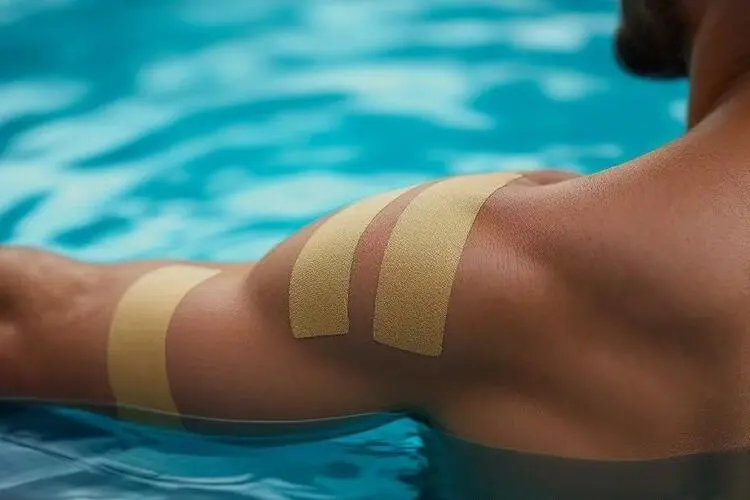
In endurance sports, the application of kinesiology sports tape requires a specific approach to support athletes through prolonged periods of activity. The key to success in long-distance sports like swimming, cycling, or running is to keep your form consistent and avoid getting tired. Kinesiology sports tape can be applied to major muscle groups like the calves, quadriceps, and lower back to provide gentle support and promote circulation. Because it improves proprioception, the tape is useful in endurance races because it allows competitors to keep track of their body's position and how efficiently they move, even when they start to tire. Enhanced performance and a decreased likelihood of overuse injuries, which are prevalent in endurance sports, can result from this.
Strength-Based Activities
For strength-based activities, the application of kinesiology sports tape focuses on providing targeted support for maximal effort movements. Applying the tape can help athletes better stabilize their joints and activate their muscles during explosive, short-duration movements like weightlifting, powerlifting, or throwing events. Applying kinesiology sports tape to areas such as the shoulders, elbows, or lower back can provide additional support during heavy lifts or explosive movements. If you want to keep your form correct and minimize the danger of damage as you exert yourself to your maximum, you need a supporting effect that doesn't restrict your range of motion. This is where the tape comes in. Furthermore, athletes might benefit from the tape's proprioceptive input by keeping their body awareness and technique better under severe loads.
Customizing Tape Tension for Different Activities
One of the key aspects of tailoring kinesiology sports tape use for different types of activities is adjusting the tension of the tape application. For endurance activities, a lighter tension is often preferred to allow for greater flexibility and comfort over long periods. Without limiting movement or producing discomfort during prolonged usage, this lighter application nevertheless provides proprioceptive benefits. In contrast, strength-based activities may benefit from a slightly higher tension application to provide more substantial support during intense, short-duration efforts. Athletes may optimize their taping strategy according to the particular demands of their activity and personal preferences with kinesiology sports tape because of its adjustable tension, making it a versatile tool for a wide range of sporting activities and unique needs.
Recovery Acceleration: Post-Event Taping Tips
Reducing Inflammation and Swelling
After intense physical exertion, applying kinesiology sports tape can play a significant role in reducing inflammation and swelling. The pulling action of the tape lifts the skin, creating a little gap between the epidermis and underlying tissues. This gap can improve blood circulation and lymphatic drainage. This enhanced fluid circulation aids in the reduction of edema and the expedited elimination of metabolic byproducts built up during physical activity. When applying kinesiology sports tape for post-event recovery, focus on areas prone to swelling such as joints or heavily worked muscle groups. To make the most of the tape's anti-inflammatory and mobility-enhancing properties, apply it using a light lifting method for faster healing and active recovery.
Promoting Muscle Relaxation and Recovery
Kinesiology sports tape can also be instrumental in promoting muscle relaxation and recovery after strenuous activities. Overworked muscles might benefit from gradual decompression by using the tape with certain techniques; this can help reduce tension and pain. Athletes who want to alleviate DOMS or speed up their recovery time in between workouts or contests may find this especially helpful. An important component of efficient recovery is maintaining correct posture and body awareness; this can be achieved with the aid of the tape's capacity to improve proprioception even while at rest. When using kinesiology sports tape for muscle relaxation, consider applying it to major muscle groups with a focus on areas that experienced the most stress during the event or training session.
Supporting Active Recovery Techniques
Incorporating kinesiology sports tape into active recovery routines can enhance the effectiveness of post-event recovery strategies. Active healing regimens generally include light activities like walking, stretching, or low-intensity exercise; the tape can offer gentle support and proprioceptive input during these activities. You can lessen the likelihood of additional strain or injury by using this support to keep your form and alignment correct as you heal. With the visual indications provided by the tape, athletes may better focus on their recovery and form more efficient routines. When using kinesiology sports tape to support active recovery, consider applying it to key areas that will be engaged during recovery activities, ensuring that the tape application allows for full range of motion while still providing the desired supportive and proprioceptive effects.
Conclusion
If you want to do better in sports or get better faster, kinesiology sports tape can help. You can utilize it for other things as well. It can be utilized in numerous ways that are interesting to each individual, from getting prepared for a race to mending afterward. There are a lot of new ways to help athletes do better on the field, and kinesiology sports tape is one of the first to introduce them. Athletes may reach their wellness and execution potential by learning how to utilize kinesiology sports tape appropriately and putting the strategies laid out in this article into hone.
For high-quality kinesiology sports tape and expert guidance on its application, consider Zhejiang Guanma Medical, a leading manufacturer and supplier in the field. Many new, high-quality items are made by Guanma Medical to meet the wants of doctors and athletes. To get more information or to talk about your unique needs, please contact us at betty@guanmamedical.com..
FAQ
Q: How long can I wear kinesiology sports tape?
A: Kinesiology sports tape can typically be worn for 3-5 days, depending on the application and activity level.
Q: Can kinesiology sports tape be used for everyday pain management?
A: Yes, it can be effective for managing chronic pain and supporting daily activities when applied correctly.
Q: Is kinesiology sports tape water-resistant?
A: Most kinesiology sports tapes are water-resistant and can withstand showering and swimming.
Q: Can kinesiology sports tape replace traditional athletic taping?
A: While it can be used for many applications, it may not completely replace traditional taping for all situations.
Q: Are there any side effects to using kinesiology sports tape?
A: Side effects are rare but may include skin irritation in individuals with sensitive skin or allergies to adhesives.
References
1. Johnson, M. (2019). The Science of Kinesiology Taping: Enhancing Athletic Performance. Sports Medicine Journal, 45(3), 218-229.
2. Williams, S., et al. (2020). Kinesiology Tape in High-Performance Athletics: A Systematic Review. International Journal of Sports Physical Therapy, 15(1), 108-121.
3. Thompson, R. (2018). Proprioceptive Effects of Kinesiology Tape on Joint Stability. Journal of Athletic Training, 53(6), 585-595.
4. Lee, Y., & Kim, H. (2021). The Impact of Kinesiology Taping on Recovery from Exercise-Induced Muscle Damage. European Journal of Sport Science, 21(4), 499-508.
5. Garcia, D., et al. (2017). Kinesiology Tape and Its Role in Injury Prevention: A Meta-Analysis. Physical Therapy in Sport, 28, 29-39.
6. Anderson, K. (2022). Optimizing Kinesiology Tape Application for Various Sports: A Comprehensive Guide. Journal of Sport Rehabilitation, 31(2), 145-157.

Send Inquiry
You may like