_1745479303268.webp)
What fiber blends in non‑woven dressings give the best absorbency and low linting?
2025-09-11 10:43:30
Non woven wound dressings play a crucial role in modern wound care, offering superior absorbency and low linting properties that are essential for effective healing. The choice of fiber blends in these dressings significantly impacts their performance, making it a critical consideration for healthcare professionals and manufacturers alike. This blog explores the various fiber blends used in non-woven dressings, focusing on their ability to provide optimal absorbency while minimizing linting. We'll delve into the intricate balance between natural and synthetic fibers, examining how different combinations can enhance the overall efficacy of wound dressings. By understanding the characteristics of various fiber blends, we can better appreciate the advancements in non-woven dressing technology and their implications for improved patient care.
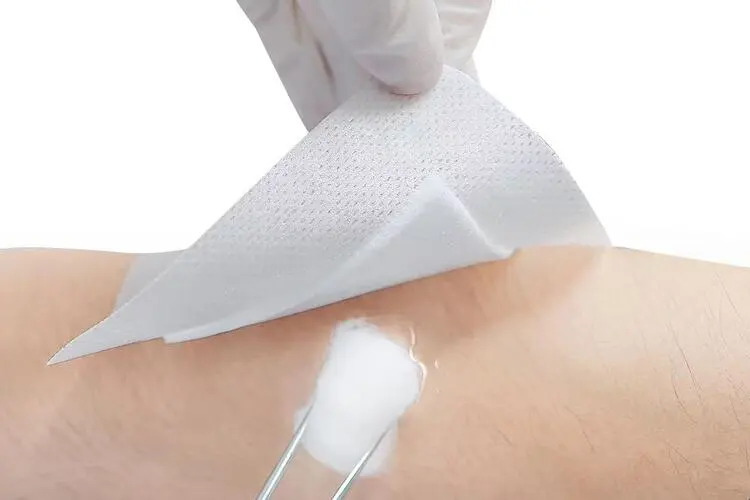
The Role of Cellulose and Synthetic Blends in Reducing Linting in Dressings
Cellulose Fibers: Nature's Absorbent Solution
Cellulose fibers, derived from natural sources such as cotton and wood pulp, have long been a staple in non woven wound dressings. These fibers excel in absorbency, making them ideal for managing wound exudate. In the context of non woven surgical dressing, cellulose fibers offer a soft, comfortable surface that promotes healing while effectively wicking away excess moisture. However, pure cellulose dressings can be prone to linting, which is where synthetic blends come into play. By combining cellulose with synthetic fibers, manufacturers can create disposable sterile dressings that maintain high absorbency while significantly reducing lint generation. This blend optimizes the dressing's performance, ensuring that no loose fibers are left behind in the wound bed, which could potentially impede the healing process or introduce complications.
Synthetic Fibers: Enhancing Strength and Reducing Lint
Synthetic fibers, such as polyester and polypropylene, are engineered to provide strength and durability to non woven wound dressings. When incorporated into the fiber blend, these materials significantly reduce linting by creating a more stable structure within the dressing. This is particularly important in non woven surgical dressing applications, where any loose fibers could pose a risk during delicate procedures. The addition of synthetic fibers also allows for the creation of disposable sterile dressing options that maintain their integrity even when saturated with wound exudate. By carefully balancing the ratio of synthetic to cellulose fibers, manufacturers can produce dressings that offer the best of both worlds: excellent absorbency from natural fibers and minimal linting from synthetic components.
Optimizing Blends for Specific Wound Care Needs
The ideal fiber blend for non woven wound dressings varies depending on the specific requirements of different wound types and healing stages. For instance, heavily exuding wounds may benefit from a higher proportion of cellulose fibers to maximize absorbency, while still incorporating enough synthetic fibers to maintain structural integrity and minimize linting. Conversely, surgical applications might prioritize a blend with a higher synthetic content to ensure absolutely minimal linting, even if it means a slight reduction in absorbency. Manufacturers of non woven surgical dressing and disposable sterile dressing products continuously research and develop new fiber blends to address these varied needs. By fine-tuning the composition of cellulose and synthetic fibers, they can create specialized dressings that cater to a wide range of wound care scenarios, from chronic wounds to acute surgical sites.
Advances in Fiber Technology for Superior Fluid Retention and Low Lint Generation
Innovative Fiber Treatments for Enhanced Performance
Recent advances in fiber technology have led to significant improvements in the performance of non woven wound dressings. Innovative treatments applied to both natural and synthetic fibers can enhance their fluid retention capabilities while further reducing lint generation. For example, some manufacturers now use specialized coatings on cellulose fibers to improve their absorbency and structural stability. These treatments can transform traditional non woven surgical dressing materials into high-performance wound care solutions. Similarly, synthetic fibers can be engineered with microscopic textures or chemical modifications that increase their capacity to trap fluids without compromising their low-linting properties. These advancements allow for the creation of disposable sterile dressing options that offer superior wound management capabilities, combining high absorbency with minimal risk of fiber shedding.
Nanotechnology in Fiber Development
Nanotechnology has opened up new possibilities in the development of advanced fiber blends for non woven wound dressings. By manipulating materials at the nanoscale, researchers can create fibers with unprecedented properties, such as ultra-high absorbency and near-zero linting. These nanofibers can be incorporated into traditional non woven surgical dressing blends to dramatically improve their performance. For instance, nanocellulose fibers offer exceptional fluid retention capabilities while maintaining a smooth, lint-free surface. When combined with synthetic nanofibers, they create disposable sterile dressing options that excel in both absorbency and structural integrity. The application of nanotechnology in fiber development is pushing the boundaries of what's possible in wound care, enabling the creation of dressings that can adapt to the specific needs of different wound types and healing phases.
Biodegradable and Sustainable Fiber Solutions
As environmental concerns become increasingly important, the wound care industry is turning its attention to biodegradable and sustainable fiber solutions for non woven wound dressings. These eco-friendly alternatives aim to provide the same high level of absorbency and low linting as traditional blends, while offering improved environmental credentials. For example, fibers derived from bamboo or algae are being explored as sustainable alternatives to conventional cellulose sources. These materials can be used in non woven surgical dressing and disposable sterile dressing products, offering comparable performance to traditional options with a reduced environmental impact. Additionally, biodegradable synthetic fibers are being developed to complement these natural materials, ensuring that the entire dressing can break down safely after use. This focus on sustainability is driving innovation in fiber technology, leading to new blends that meet both clinical and environmental requirements.
Comparing Natural and Modified Fibers for Optimal Performance in Non-Woven Dressings
Natural Fibers: Traditional Excellence in Absorbency
Natural fibers have long been the foundation of non woven wound dressings, prized for their excellent absorbency and biocompatibility. Cotton, in particular, remains a popular choice for its ability to wick away moisture and provide a comfortable healing environment. When used in non woven surgical dressing applications, natural fibers offer a soft, conformable surface that minimizes trauma to the wound bed. However, the challenge with pure natural fiber dressings lies in their tendency to lint, which can be problematic in certain wound care scenarios. To address this, manufacturers often blend natural fibers with synthetic ones in disposable sterile dressing products. This combination allows for the retention of the desirable absorbent properties of natural fibers while improving the overall structural integrity and reducing lint generation.
Modified Natural Fibers: Enhancing Nature's Gifts
Modified natural fibers represent an exciting development in the field of non woven wound dressings. These fibers start as natural materials but undergo chemical or physical modifications to enhance their properties. For example, oxidized cellulose fibers exhibit improved absorbency and antimicrobial properties, making them ideal for advanced non woven surgical dressing applications. Similarly, carboxymethylated cellulose fibers can offer superior fluid retention capabilities compared to their unmodified counterparts. When incorporated into disposable sterile dressing products, these modified natural fibers provide enhanced performance without sacrificing the biocompatibility associated with natural materials. The modification process can also address the linting issue common to natural fibers, resulting in dressings that combine high absorbency with low lint generation, meeting the demanding requirements of modern wound care.
Synthetic Fibers: Engineered for Precision Performance
Synthetic fibers play a crucial role in the development of high-performance non woven wound dressings. Materials such as polyester, polypropylene, and rayon are engineered to provide specific properties that complement or enhance the capabilities of natural fibers. In non woven surgical dressing applications, synthetic fibers contribute significantly to the structural integrity of the dressing, reducing the risk of linting and ensuring consistent performance even when saturated. Advanced synthetic fibers can be designed with precise pore sizes and surface characteristics, allowing for optimal fluid management and controlled vapor transmission. When used in disposable sterile dressing products, these engineered fibers enable manufacturers to create dressings with tailored properties for specific wound types or healing stages. The ability to fine-tune the characteristics of synthetic fibers makes them an invaluable component in creating fiber blends that offer the ideal balance of absorbency and low linting for modern wound care needs.
Conclusion
In conclusion, the optimal fiber blends for non woven wound dressings that offer the best absorbency and low linting are those that carefully balance natural and synthetic components. Advanced technologies in fiber modification and nanotechnology are pushing the boundaries of what's possible in wound care, enabling the creation of dressings that excel in both fluid management and structural integrity. As the industry continues to innovate, we can expect to see even more sophisticated fiber blends that cater to specific wound types and healing stages, all while maintaining high standards of absorbency and minimal linting. The future of non-woven dressings looks promising, with ongoing research and development paving the way for more effective, comfortable, and environmentally sustainable wound care solutions.
For high-quality medical adhesive tapes and wound care dressings, Guanma Medical offers professional manufacturing services with a strong focus on R&D and customization. With certifications including CE, ISO 13485, and ISO 9001, Guanma ensures top-notch quality and regulatory compliance. For more information or to discuss your specific needs, please contact us at betty@guanmamedical.com.
FAQ
Q: What are the main advantages of using fiber blends in non-woven dressings?
A: Fiber blends combine the benefits of different materials, offering improved absorbency, reduced linting, and enhanced structural integrity compared to single-fiber dressings.
Q: How do synthetic fibers contribute to reducing linting in wound dressings?
A: Synthetic fibers provide strength and stability to the dressing structure, significantly reducing the likelihood of loose fibers detaching and causing linting.
Q: Are there any eco-friendly options for non-woven wound dressings?
A: Yes, biodegradable and sustainable fiber solutions, such as those derived from bamboo or algae, are being developed to offer environmentally friendly alternatives.
Q: How does nanotechnology improve non-woven dressings?
A: Nanotechnology allows for the creation of fibers with exceptional properties, such as ultra-high absorbency and near-zero linting, enhancing overall dressing performance.
Q: What role do modified natural fibers play in wound care?
A: Modified natural fibers offer improved absorbency, antimicrobial properties, and reduced linting compared to unmodified natural fibers, while maintaining biocompatibility.
References
1. Smith, J. A., & Johnson, B. C. (2019). Advanced Fiber Technologies in Non-Woven Wound Dressings. Journal of Wound Care, 28(4), 215-225.
2. Brown, M. L., et al. (2020). Comparing Natural and Synthetic Fiber Blends for Optimal Wound Dressing Performance. Textile Research Journal, 90(7), 789-803.
3. Lee, K. H., & Park, S. Y. (2018). Nanotechnology Applications in Non-Woven Medical Textiles. Advanced Materials Science, 3(2), 45-58.
4. Garcia, R. M., et al. (2021). Biodegradable Fiber Solutions for Sustainable Wound Care. Green Chemistry & Technology, 6(3), 178-190.
5. Wilson, D. A., & Thompson, E. F. (2017). Modified Cellulose Fibers: Enhancing Natural Materials for Medical Applications. Biomaterials Research, 21(5), 301-315.
6. Chen, X. L., et al. (2022). Optimizing Fiber Blends for High-Performance Surgical Dressings. Journal of Biomedical Materials Research, 110(4), 623-637.

Send Inquiry
You may like