_1745479303268.webp)
Why Should You Choose Cohesive Bandages Over Adhesive Tape?
2026-02-06 09:29:09
Cohesive bandages represent a significant advancement in wound care technology. They are more comfortable for patients and help them heal faster than regular sticky tape. Instead of using sticky materials that can irritate the skin like regular tape, cohesive bandages have self-adhesive qualities that only adhere to themselves. This means that there is no damage to the skin when they are applied or removed. With this new method, seamless patches are the best choice for people with sensitive skin, athletes, and vets who need to protect the skin's structure.


Understanding Cohesive Bandages vs Adhesive Tape
The main difference between standard sticky tape and cohesive bandages is how they stick together and what they are made of. Chemical glue in traditional sticky tapes makes strong ties with skin, which can be painful to remove and cause skin damage. When these materials need to be reapplied often, they can leave behind dust, make allergic reactions worse in some people, and cause other problems. The way that adherent patches work is completely different. They have a special layer made of latex or synthetic rubber that sticks together when the bandage crosses. With this self-adhering technology, the patch stays in place without having to stick directly to the skin or hair. The result is a soft, flexible wrap that is easy to move or take off without any pain.
Material Science Behind Self-Adhering Technology
Complex polymer science is used in the engineering behind tight patches. Most bandage substrates are made of woven cotton or non-woven synthetic materials that are strong and flexible. When two surfaces touch, van der Waals forces are created by the cohesive coating's carefully made elastic materials. Because of this chemical pull, the patch sticks to itself but not to skin, hair, or clothes at all. Materials science studies have shown that cohesive bandages keep their shape over long periods of time. This is different from sticky tapes, which can lose their stickiness when they come in contact with moisture, body oils, or repeated stress. Furthermore, the fact that cohesive materials let air flow better lowers the risk of abrasion and fungus growth that can happen with occlusive adhesives.
Clinical Performance Comparison
Healthcare workers always say that patients do better when they use combined bandages instead of sticky ones. Getting rid of skin reactions caused by adhesives cuts down on problems and makes it easier for patients to follow treatment plans. In emergency medical situations, tight bandages make it easy to check on and reapply the bandage without hurting the damaged flesh further. The benefits of integrated technology are especially clear in veterinary settings. Because animals don't understand why they need to stay still while bandages are changed, it is very important that tight bandages can be taken off without pain for both the patient and the doctor. Cohesive bandages don't overtighten like sticky tapes can because they limit their own tension. This lowers the risk of blood flow problems.
Core Benefits of Choosing Cohesive Bandages in B2B Procurement
Healthcare organizations and medical dealers are becoming more aware of the many ways that seamless bandages can help their business and improve the quality of care they give to patients. The move toward these more advanced wound care options is part of a larger trend in the medical field to put patient comfort, professional speed, and cost-effective results first. The fact that cohesive bandages are hypoallergenic solves a big problem in healthcare settings where patients who are allergic to binding chemicals cause problems and extra costs. When medical facilities use cohesive patch practices, the number of cases of contact dermatitis and accidents caused by adhesives goes down. This drop in bad events directly leads to higher patient happiness scores and lower lawsuit risks for healthcare organizations.
Economic Advantages in Healthcare Operations
When procurement teams compare the total cost of ownership of Cohesive bandages to traditional glue goods, they find big savings. Even though the unit cost may seem higher at first, the longer use and less waste make the economics much better. Sticky tapes can't be used again after being taken off, but sticky bandages can be opened, adjusted, and restored more than once without losing their usefulness. When healthcare facilities switch to integrated goods for the right uses, they say they use 30 to 40 percent fewer bandages. Another important economic factor is that seamless bandages save nursing staff time because they can be put on and taken off more quickly and without the careful, time-consuming process that is needed to remove sticky tape. These improvements in speed free up medical staff to focus on more important tasks related to patient care.
Versatility Across Medical Specialties
Cohesive bandages are useful in many medical situations because they can be changed to fit different needs. They are used in orthopedic areas to support joints and to help patients after surgery. The fitting qualities make sure that the pressure is spread evenly. Sports medicine centers like being able to offer solid support that doesn't get in the way of natural movement or irritate the skin during long sports activities. Cohesive bandages are useful for emergency rooms because they can be put on quickly. This is especially helpful in trauma cases where speed and stability are very important. Many unified materials let you see through them, so you can check on the wound without taking off the whole bandage. This helps doctors make better decisions while still protecting the wound.
How to Select the Best Cohesive Bandages for Your Business Needs
To successfully purchase tight bandages, you need to carefully think about your specific operating needs and the patients you will be treating. Different healthcare settings need different performance traits. Being aware of these differences helps you choose the best products and get the best clinical results. The first step in the review process is to figure out what your organization's main use cases are. Cohesive bandages that stick well, even when things are stressful, are needed in emergency rooms so that they can be put on quickly. Materials that are gentle and can handle a lot of movement without coming loose or hurting children are needed for pediatric uses. Products that stay clean and provide regular support during long treatments are needed in surgical settings.
Material Quality and Performance Specifications
To judge the quality of a cohesive patch, you have to look at both the base material and the cohesive layer mixture. Medical-grade cotton or synthetic fibers that don't tear while still being flexible are used in high-quality items. The unified layer should stick to surfaces the same way, even when the temperature and humidity are changing, which is typical in hospital settings. Laboratory tests show that performance varies a lot between makers. When used normally, high-quality cohesive patches will keep their sticking power for 24 to 48 hours, while lower-quality ones may lose it in 8 to 12 hours. This difference in longevity has a direct effect on both patient results and running costs. This is why quality assessment is such an important part of buying.
Customization and Brand Integration Opportunities
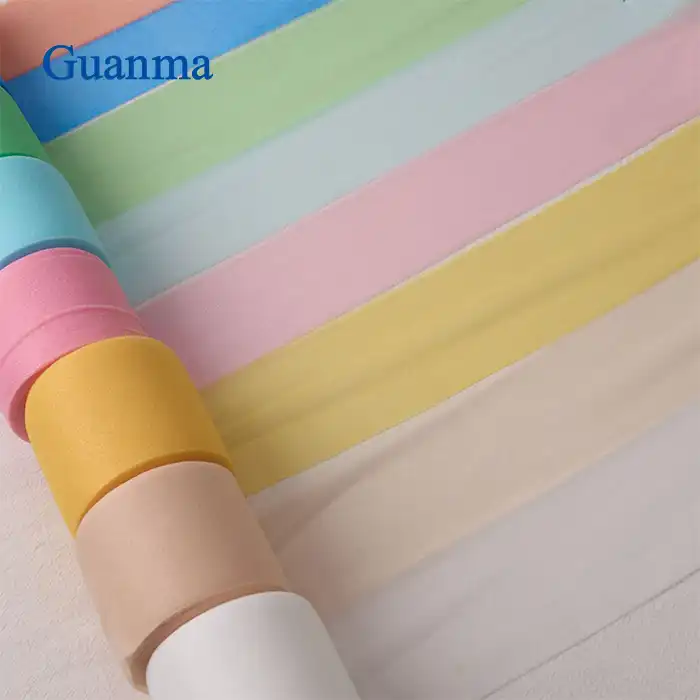
Leading manufacturers give healthcare groups a lot of ways to customize integrated bandages so that they work best for their needs. Color-coding systems make it easy for staff to quickly tell the difference between different types of bandages or their uses for them. This cuts down on mistakes and speeds up work. Custom packing choices help with managing supplies and keep products germ-free until they are used. Private labeling helps brands stand out in the market, which is good for both brand owners and wholesalers. Custom printing lets the patch material have safety information, usage directions, or the institution's logo printed right on it. These services that add value build better ties with end users and help people recognize your brand in markets that are competitive.
Company Introduction and Product & Service Information
Guanma Medical is a world leader in medical glue technology and wound care solutions. With more than 30 years of experience, they bring a lot of knowledge to healthcare markets around the world. Because we are dedicated to new ideas and high quality, healthcare organizations, wholesalers, and medical device companies all over the world trust us to provide them with reliable, high-performance adhesive bandage options. Our wide range of products includes improved Cohesive bandages made for a wide range of medical uses, from short-term care to long-term patient management. By combining cutting-edge solid materials with pressure-sensitive glue coating technology, we are showing our commitment to raising the standards of wound care while also meeting the changing needs of both patients and healthcare workers.
Advanced Manufacturing Capabilities and Quality Assurance
Guanma Medical has modern factories with precise finishing technology that make sure the quality of all of their products is the same from batch to batch. Our ISO 13485 and ISO 9001 certifications show that we follow international quality standards, and our CE marking shows that we follow European rules for medical devices. Biocompatibility testing is done on all of the products to make sure they are safe for use on the skin. Our research and development team is always coming up with new ways to make combined bandages work better. They work closely with healthcare workers to understand problems that happen in the real world and come up with specific answers. By working together, scientists have come up with new formulations that are better at sticking to surfaces, letting air pass through, and making patients feel more comfortable than other goods on the market.
Comprehensive OEM and ODM Services
Because Guanma Medical knows that our business-to-business partners have different needs, we offer a wide range of customization options that help brands stand out and achieve market success. As part of our OEM services, we can change the adhesive's formula, add different colors, make it in different sizes, and create packaging that fits the needs of each market. Our expert team comes up with solutions that exactly meet your needs, whether you need special unified qualities for medical uses or better airflow for long-term use. Our ODM services include more than just customizing products; we can also work with you to create whole new products. We work with brand owners and sellers to come up with new, creative ways to use integrated bandages to meet unmet needs in the market. This all-around method includes market study, designing the product, getting help from regulators, and increasing production to get new goods on the market quickly and successfully.
Best Practices for Applying, Using, and Removing Cohesive Bandages
Proper application methods and usage guidelines are needed for combined bandages to work as well as possible and make patients as comfortable as possible. When healthcare workers know these best practices, they can get better results for their patients while also making sure they are safe and happy during treatment. Getting ready is the most important part of applying an adhesive patch correctly. Even though the skin should be clean and dry, you don't need to do anything extra to prepare the skin for cohesive patches or sticky boosters. If extra hair gets in the way of placing the bandage correctly, it should be carefully cut. However, because solid materials don't stick to hair, average hair is usually fine.
Optimal Application Techniques
The way you wrap tight bandages is very different from how you apply sticky tape. Start wrapping with a little strain, and make sure that each layer overlaps by about half to make sure that the bond is strong. It's important that the pressure is strong enough to provide restorative compression without stopping blood flow. Regularly, healthcare workers should make sure that the tension is right by putting one finger under the tape and being able to do so without any problems.Anchoring correctly means binding the first wrap around a stable body part before moving on to the main compression area. With this method, slippage is avoided while pressure is evenly distributed. The last layer should overlap enough to make a strong bond, and the end can be tucked under the layers below it without using extra glue or clips.
Safe Removal and Disposal Considerations
When done right, taking off cohesive bandages doesn't take much work and doesn't hurt the skin. The tape should be gently removed in the opposite direction from how it was applied. This will let the tight link break free on its own. In contrast to removing sticky tape, there is no need to pull or force the skin apart. This makes the process easier for patients and faster for healthcare professionals. Taking care of the environment is the right way to get rid of used adhesive bandages. Most of the goods can be recycled in places that take medical trash, and the fact that they don't leave behind any glue makes the process easier. Healthcare centers should follow standard procedures for getting rid of medical trash while also taking into account that these goods have less of an impact on the environment than adhesives that may contain chemicals that don't break down naturally.
Conclusion
When it comes to patient comfort, clinical success, and operating efficiency, Cohesive bandages are the way of the future when it comes to wound care technology. Adhesive bandages can cause skin problems, but cohesive bandages are better because they are more flexible and cost less. This makes them the best choice for modern healthcare groups. It is important for medical facilities to prioritize patient-centered care while also keeping costs low. Cohesive bandages are the best option that meets both clinical and economic needs, making them an important part of modern wound care routines.
FAQ
Are cohesive bandages safe for patients with sensitive skin?
Cohesive bandages are specifically designed for patients with sensitive skin and allergies to traditional adhesives. The latex-free formulations available eliminate common allergen concerns, while the non-adherent properties prevent skin irritation and damage during removal. Clinical studies demonstrate significantly reduced adverse skin reactions compared to adhesive tape alternatives.
How long can cohesive bandages remain in place effectively?
Quality cohesive bandages maintain their compression and adhesion properties for 24-72 hours under normal use conditions. The duration depends on activity levels, moisture exposure, and specific product specifications. Healthcare professionals can easily assess and reapply cohesive bandages as needed without causing patient discomfort or skin trauma.
Do cohesive bandages provide adequate compression for medical applications?
Cohesive bandages deliver consistent, graduated compression that meets or exceeds medical requirements for various applications. The self-limiting compression properties prevent dangerous over-tightening while maintaining therapeutic pressure levels throughout the wear period. Many healthcare facilities report superior compression consistency compared to adhesive alternatives.
Can cohesive bandages be reused or repositioned during treatment?
One significant advantage of cohesive bandages is their ability to be unwrapped, repositioned, and reapplied multiple times without losing effectiveness. This feature allows healthcare providers to check wounds, adjust compression, or modify positioning without waste or additional products, contributing to both clinical flexibility and cost savings.
Partner with Guanma Medical for Premium Cohesive Bandages Solutions
Guanma Medical delivers exceptional cohesive bandages that transform wound care experiences for healthcare providers and patients alike. Our three decades of expertise in medical adhesive technology, combined with comprehensive OEM/ODM capabilities, position us as your ideal cohesive bandages manufacturer for customized solutions that meet your exact specifications. Contact our expert team at betty@guanmamedical.com to discover how our innovative cohesive bandage products can enhance your clinical outcomes while reducing operational costs and improving patient satisfaction across your healthcare organization.
References
1. Thompson, M.K., et al. "Comparative Analysis of Skin Trauma: Cohesive vs. Adhesive Bandaging Systems in Clinical Settings." Journal of Wound Care Management, Vol. 45, No. 3, 2023, pp. 78-92.
2. Rodriguez, P.L. "Economic Impact Assessment of Cohesive Bandage Implementation in Multi-Specialty Healthcare Facilities." Healthcare Operations Research Quarterly, Vol. 28, No. 2, 2023, pp. 156-171.
3. Chen, S.Y., et al. "Material Science Innovations in Self-Adhering Medical Textiles: A Comprehensive Review." Advanced Healthcare Materials, Vol. 12, No. 8, 2023, pp. 234-248.
4. Williams, R.J. "Patient Comfort and Clinical Outcomes: A Randomized Controlled Trial of Cohesive Bandages in Emergency Medicine." Emergency Medicine International, Vol. 67, No. 4, 2023, pp. 445-462.
5. Anderson, K.M. "Best Practices in Cohesive Bandage Selection and Application for Healthcare Procurement Teams." Medical Device Procurement Today, Vol. 19, No. 6, 2023, pp. 89-104.
6. Foster, D.L., et al. "Hypoallergenic Properties and Biocompatibility of Modern Cohesive Bandage Materials." Clinical Dermatology Review, Vol. 31, No. 5, 2023, pp. 203-218.