_1745479303268.webp)
What Are the Side Effects of Capsicum Plaster ?
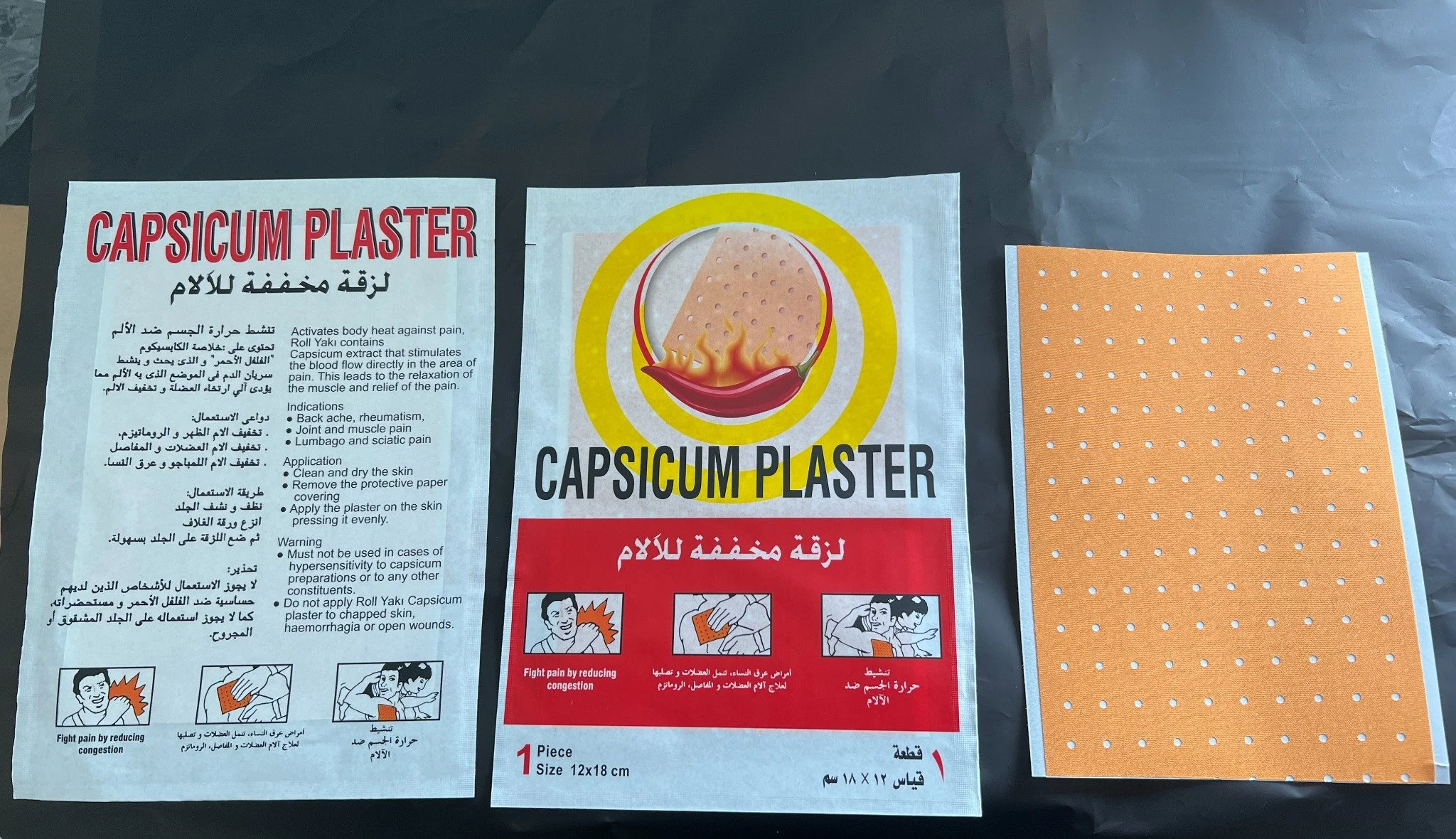
Capsicum plaster—also called capsicum pain relief patch, capsicum hot patch, or capsicum analgesic plaster—is a popular topical product used for muscle pain, joint pain, and stiffness.
It works by using capsaicin (the active “spicy” ingredient from chili peppers) to generate warmth and improve local blood circulation.
Most people use it safely, but like any product that generates heat, it can cause certain side effects—especially if the skin is sensitive or if it’s used the wrong way.
1. A Warm, Burning, or Tingling Sensation
This is the most common side effect, after applying capsicum plaster, many people feel: mild burning, warm tingling, a “spicy” heat sensation. This usually means the patch is working. However, if the heat becomes very strong, it might be too stimulating for your skin—especially for first-time users. If the heat becomes uncomfortable, remove the patch and wash the area with cool water (avoid hot water—it may intensify the heat).
2. Skin Redness (Erythema)
Because capsicum increases blood flow, you may see temporary redness on the skin. This is usually harmless and fades within a few hours. But if the redness continues for more than 24 hours or becomes painful, this may indicate mild irritation.
3. Itching or Mild Irritation
Some users, especially those with sensitive skin, may feel: itching, light prickling, slight swelling. This is usually related to capsaicin’s stimulating effect and is not an allergy. However, if the itching becomes more like a rash, stop using it and observe your skin for the next several hours.
4. Skin Sensitivity After Removing the Patch
Even after removing the patch, the skin may feel: warm, sensitive to touch, slightly tender. This is normal. Capsaicin continues working under the skin for 2–12 hours. If you apply another hot product (like hot water bag, heating pad, or hot shower), the heat may feel much stronger. So avoid extra heat.
5. Blistering — Rare but Needs Attention
In rare cases, especially on very delicate skin or if the plaster is left on too long, the skin can develop: small blisters, peeling, burning patches. This usually means the skin barrier was overwhelmed by the heat. If this happens:Stop using the product and avoid scratching or rubbing the area. Let the skin cool down naturally.
6. Allergic Reaction — Very Rare
A true allergy to capsicum plaster is uncommon but possible. Watch for: strong swelling, rash spreading beyond the patch area, intense burning that does not fade, hives, difficulty breathing (extremely rare). If any of these occur, remove the patch and seek medical help.
7. Not Suitable for Broken or Damaged Skin
If the skin already has: open wounds, eczema, scratches, sunburn, dermatitis. Capsicum plaster may irritate it further. Always apply on intact skin only.
8. Who Should Be More Careful Using Capsicum Plaster?
You should use with extra caution if you are:
• someone with very sensitive skin
• elderly with thin skin
• children (not recommended unless advised)
• pregnant or breastfeeding (consult a doctor)
• someone who cannot feel heat normally (e.g., diabetic neuropathy)
9. How to Reduce Side Effects (Practical Tips)
To enjoy the warming effect without discomfort, try these:
✔ Do a patch test for 10–15 minutes
✔ Start with shorter usage time
✔ Don’t sleep with it on
✔ Avoid hot showers right after use
✔ Do not use with other heating products
10. Are Capsicum Plasters Safe?
Yes—capsicum plasters are generally safe, widely used, and effective for: muscle strain, shoulder and neck stiffness, lower back pain, arthritic discomfort. Most side effects are mild and temporary. The key is to understand how the heat works and listen to your skin.
If you experience extreme redness, blistering, or intense burning, simply stop using it and allow your skin to recover.
Send Inquiry
You may like