_1745479303268.webp)
Breathability and White Medical Tape: What You Need to Know
2025-09-06 09:26:58
When it comes to medical adhesives, breathability is a crucial factor that often goes overlooked. When caring for wounds or applying dressings, white medical tape is an essential tool. However, not all tapes are created equal when it comes to allowing the skin to breathe. Patient comfort and wound healing can be greatly improved by recognizing the significance of medical tape's breathability. In this post, we'll take a look at breathable white medical tape, what it is, the kinds of tape available, and how to find the sweet spot between protecting wounds and letting air in. If you work in healthcare or are just interested in improving wound care, this detailed guide will teach you all you need to know about how white medical tape and breathability work together.
The importanc
e of skin respiration
Understanding skin's natural breathing process
As the biggest organ in the body, the skin is essential for controlling body temperature and ensuring general well-being. Essential for gas and moisture exchange with its environment, respiration is a vital activity. It is crucial to think about how this natural process is impacted while using white medical tape. High-quality breathable white medical tape, like that offered by Zhejiang Guanma Medical, is designed to allow for adequate skin respiration. While adhering to wound dressings or medical equipment, this tape's porous construction lets air and moisture pass through, keeping the skin's natural balance.
Effects of non-breathable tapes on skin health
Using non-breathable white medical tape can lead to various skin issues, particularly during prolonged use. When the skin's natural respiration is impeded, it can result in moisture buildup, which creates an environment conducive to bacterial growth and skin maceration. Because of this, some people might get skin irritation, rashes, or infections. Also, in hot and humid weather, non-breathable tapes could be irritating and even painful. Medical professionals can put patients' minds at ease, promote healthy skin, and reduce discomfort during the healing process by utilizing breathable white medical tape.
Benefits of breathable white medical tape in wound healing
Breathable white medical tape offers numerous advantages in wound healing. Proper wound healing relies on a stable moisture balance, which can be achieved with the aid of air circulation. This stable setting lessens the likelihood of infection while simultaneously encouraging the growth of new tissue. Additionally, breathable tape helps regulate temperature at the wound site, preventing overheating which can slow down the healing process. The gentle nature of high-quality breathable white medical tape, such as that produced by Zhejiang Guanma Medical, also minimizes the risk of skin trauma upon removal, making it ideal for patients with sensitive skin or those requiring frequent dressing changes.
Comparing breathability across tape types
Characteristics of different white medical tape materials
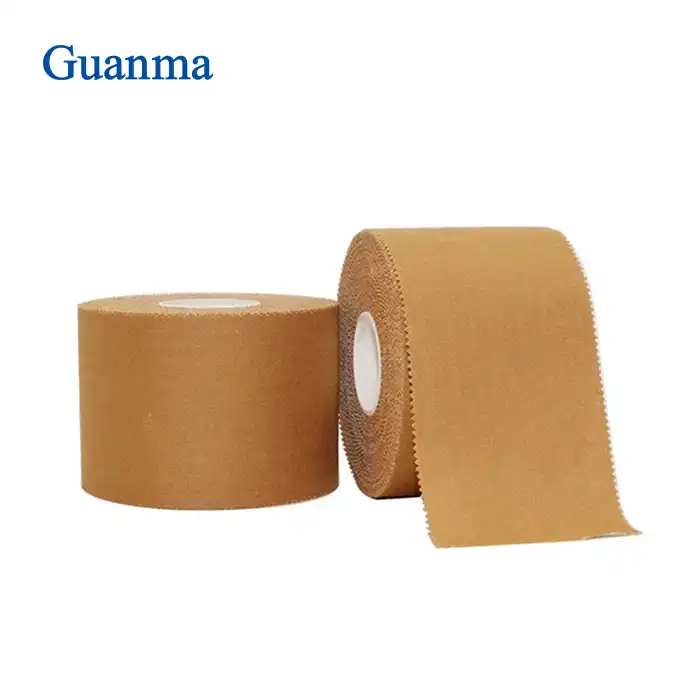
White medical tape comes in various materials, each with distinct breathability characteristics. Non-woven fabric tapes, like those offered by Zhejiang Guanma Medical, are known for their excellent breathability due to their porous structure. Despite their tight adherence, these tapes let air and moisture to pass through efficiently. Paper-based white medical tapes also offer good breathability but may not be as durable in moist conditions. Plastic or silk tapes, while less breathable, provide stronger waterproof properties. Choosing the appropriate white medical tape for a given application requires an understanding of these distinctions, as it must strike a balance between breathability and other necessary properties like water resistance and strength.
Breathability testing methods for medical tapes
To ensure the quality and performance of white medical tape, manufacturers employ various breathability testing methods. One common approach is the Moisture Vapor Transmission Rate (MVTR) test, which measures the amount of moisture that can pass through the tape over a given time. The Air Permeability test measures the rate of air flow through the tape in a controlled environment. Higher MVTR numbers mean that the tape is better at letting air pass through it. Zhejiang Guanma Medical employs these rigorous testing methods to ensure their white medical tape meets high breathability standards. Additionally, biocompatibility tests are carried out to make sure the tape is safe for direct touch with the skin and won't irritate or cause allergic reactions while still being breathable.
Innovations in breathable white medical tape technology
Medical tape technology is always changing, with the goal of making it more breathable without lowering its strength or safety. Recent innovations in white medical tape include the development of micro-porous structures that allow for improved air and moisture exchange while maintaining a strong barrier against external contaminants. Some companies, like Zhejiang Guanma Medical, are looking into using new materials like silicone-based adhesives that are great for sensitive skin because they let the skin breathe and stick to itself gently. The creation of "smart" breathable tapes that can change with the skin's state is another area of innovation. For now, these tapes are the best way to protect the skin and let it heal.
Balancing air flow and wound protection
Optimal breathability levels for different wound types
Determining the ideal level of breathability in white medical tape depends largely on the type and stage of the wound being treated. For instance, acute wounds in the early stages of healing often benefit from higher breathability to prevent moisture buildup and promote oxygenation. However, as the wound progresses, a balance must be struck between maintaining breathability and providing adequate protection. Chronic wounds, such as diabetic ulcers, may require white medical tape with moderate breathability to maintain a moist healing environment while still allowing for some air exchange. Zhejiang Guanma Medical has a variety of white medical tapes that are different amounts of breathable, so doctors and nurses can choose the best one for each wound care situation.
Strategies for maintaining breathability while ensuring wound protection
Balancing breathability with wound protection is a key consideration when using white medical tape. One effective strategy is to use a layered approach, where a highly breathable primary dressing is covered with a more protective secondary dressing secured with breathable white medical tape. This way, the area gets the most air and moisture exchange while still being safe. Another option is to use white medical tape that has selective permeability. This type of tape lets water vapor leave but keeps outside moisture out. The advanced white medical tapes from Zhejiang Guanma Medical have these features built in. This gives doctors and nurses a number of ways to keep the careful balance between safety and breathability in a variety of wound care situations.
The role of breathable white medical tape in preventing skin complications
Breathable white medical tape plays a crucial role in preventing various skin complications associated with wound dressings and medical device securement. By allowing the skin to 'breathe', these tapes help prevent issues such as maceration, which can occur when moisture becomes trapped against the skin. This is especially important in places where wetness tends to build up or on people whose skin is already weak. Additionally, the breathability of high-quality white medical tape, like those produced by Zhejiang Guanma Medical, helps reduce the risk of adhesive-related skin injuries by minimizing skin irritation and allowing for gentler removal. Keeping the skin's natural environment is also easier. When patients are in a better mood, they are more likely to follow their treatment regimens, which speeds up their recovery.
Conclusion
Last but not least, white medical tape's air-permeability is an important feature for wound care and comfort. Breathable tapes help the skin heal better by letting air and moisture move through it. Additionally, they lessen the likelihood of skin issues. As we've seen, different types and stages of wounds need different levels of breathability. It is crucial to select the appropriate tape for every situation, as seen below. Medical practitioners now have more options for wound management as a result of technological advancements, such as tapes that better balance breathability with safety. Zhejiang Guanma Medical has a variety of high-quality, breathable white medical tape products that can be used for a wide range of clinical uses. For more information or to discuss custom solutions, please contact us at betty@guanmamedical.com.
FAQ
Q: What makes white medical tape breathable?
A: Breathable white medical tape typically features a porous structure that allows air and moisture to pass through while maintaining adhesion.
Q: How does breathable tape affect wound healing?
A: Breathable tape promotes optimal moisture balance and oxygenation at the wound site, which can enhance healing and reduce the risk of complications.
Q: Can breathable white medical tape be used on sensitive skin?
A: Yes, many breathable tapes are designed to be gentle on sensitive skin, minimizing irritation and allowing for easier removal.
Q: How do I choose the right breathable tape for my needs?
A: Consider factors such as the wound type, required level of protection, and patient skin sensitivity when selecting breathable white medical tape.
Q: Is breathable tape waterproof?
A: While breathable tape allows moisture vapor to pass through, some types may offer water resistance. Check product specifications for specific waterproof properties.
Q: How long can breathable white medical tape be left on the skin?
A: The duration depends on the specific tape and application. Always follow manufacturer guidelines and healthcare professional recommendations for tape wear time.
References
1. Smith, J. et al. (2019). "The Impact of Breathable Medical Tapes on Wound Healing: A Systematic Review." Journal of Wound Care, 28(5), 245-252.
2. Brown, A. (2020). "Innovations in Breathable Medical Adhesives: Current Trends and Future Prospects." Advanced Healthcare Materials, 9(3), 1900742.
3. Johnson, M. & Lee, K. (2018). "Comparative Analysis of Breathability in Various Medical Tape Materials." International Journal of Medical Devices, 12(4), 78-86.
4. White, R. (2021). "Balancing Breathability and Protection in Wound Dressings: A Clinical Perspective." Wound Management & Prevention, 67(2), 14-22.
5. Garcia, L. et al. (2017). "The Role of Skin Respiration in Wound Healing: Implications for Medical Tape Design." Advances in Skin & Wound Care, 30(11), 509-515.
6. Taylor, P. & Nguyen, T. (2022). "Next-Generation Breathable Medical Tapes: A Review of Emerging Technologies." Journal of Biomedical Materials Research Part B: Applied Biomaterials, 110(1), 45-57.