_1745479303268.webp)
China vs South Korea medical paper tape Price Comparison for Global Buyers
2026-01-06 08:57:20
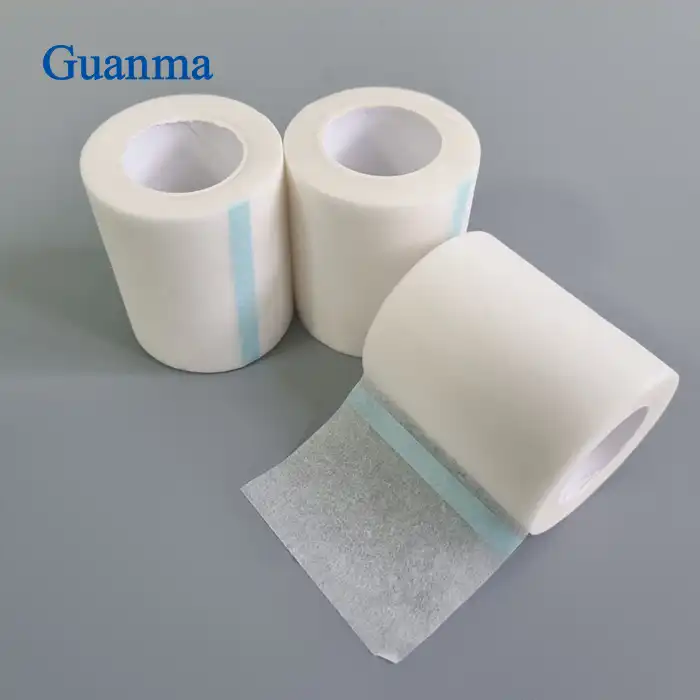
Buyers around the world often look at China and South Korea as main places to make medical paper tape for use in healthcare applications. China's prices are usually 25–40% lower than South Korea's. For example, basic medical paper tape costs between $0.08 and $0.15 per meter in China, but $0.12 to $0.22 per meter in South Korea. But price isn't the only thing that buyers consider. These two medical tape production hubs have very different quality standards, manufacturing capabilities, and compliance with regulations.
Learning About the Markets for Making Medical Paper Tape
The market for medical adhesive tape has grown incredibly fast and will be worth $8.9 billion in 2023. South Korea and China have both become major players in this field, but they have done so in different ways.
About 45% of all medical tape made in the world is made in China, which makes up the majority of global production volume. The country has a very good supply chain infrastructure that helps with everything from getting raw materials to delivering finished goods. Hundreds of medical tape factories are located in Jiangsu, Guangdong, and Zhejiang provinces, which are major production hubs.
South Korea focuses on making high-value goods that are driven by technology. Local manufacturers and companies like 3M Korea put a lot of emphasis on high-quality materials and advanced coating technologies. The rules for regulating medical devices in Korea are very similar to those used around the world. This makes Korean products very appealing for markets that are controlled.
There are three main differences in the market:
- China makes 3.2 billion meters of steel every year, while South Korea only makes 680 million meters.
- South Korea spends 8.5% of its income on research and development, while China only spends 4.2%.
- China is going after cost-conscious customers, while South Korea is going after high-end uses.
If you need to buy a lot of things at great prices, China is a better place to go for buyers on a budget.
Price Analysis: The Costs of Raw Materials and Production
Knowing how costs are structured can help you figure out why Chinese and South Korean medical paper tape manufacturers charge different prices.
The prices of raw materials vary a lot from one place to another. China benefits from making key parts in its own country:
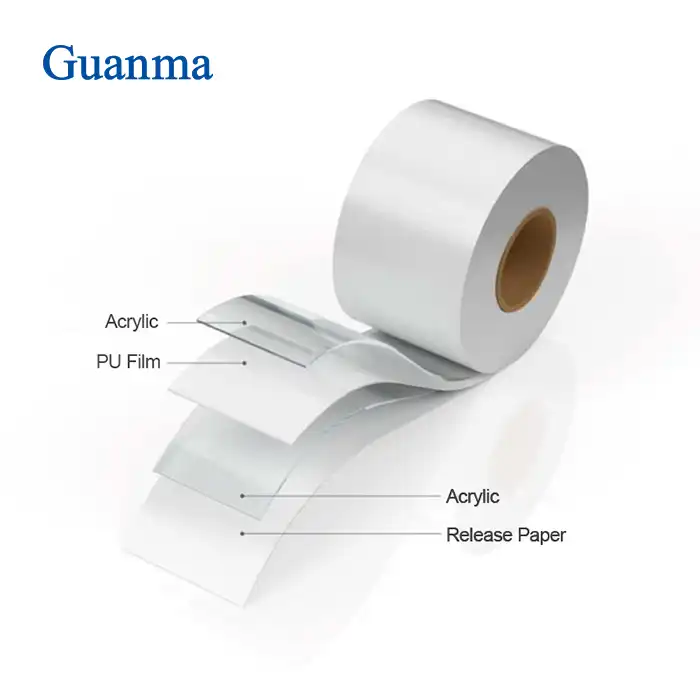
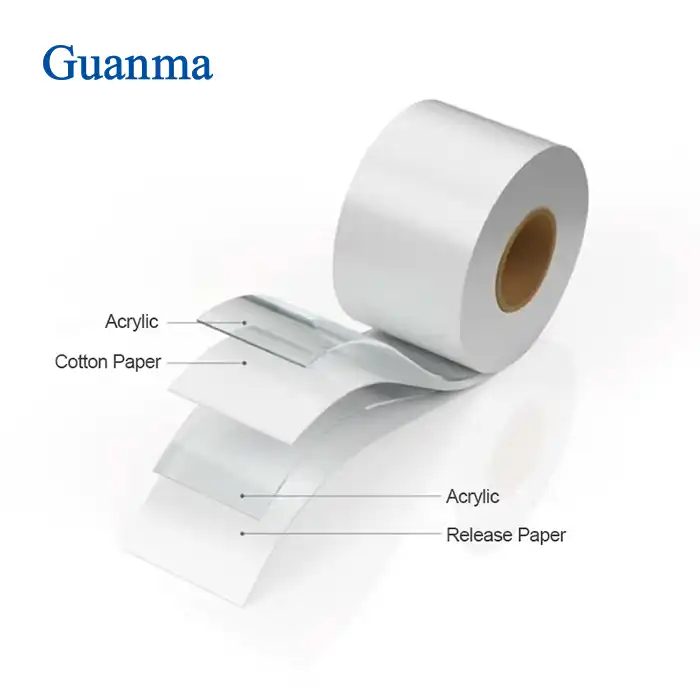
- Paper substrate costs $0.02 to $0.04 per meter in South Korea but $0.03 to $0.06 per meter in China.
- $0.015 to $0.025 per meter for medical-grade glue vs. $0.022 to $0.035 per meter
- Release liner: $0.008 to 0.015 per meter instead of $0.012 to 0.020
Costs of labor also affect the final price. For skilled technicians, factories in China pay an average of $2.80 an hour, while factories in South Korea pay $12.50 an hour. This 4.5x difference has a direct effect on the costs of making things that require a lot of work, like coating and converting.
Energy costs are another thing that affects prices. In China, industrial electricity costs $0.07 to $0.09 per kWh, while in South Korea, it costs $0.11 to $0.13 per kWh. Because adhesive coating needs a lot of heat processing, the cost of energy affects how competitive a business is.
The cost of transportation and logistics depends on where the goods are going. Chinese ports offer more shipping options and more often, which could cut the cost of shipping to most places around the world by 15 to 25 percent.
If you need clear cost breakdowns to make budget plans, Chinese suppliers usually offer more detailed pricing structures.
A look at quality standards and regulatory compliance
Quality standards are an important thing to think about when choosing medical tape suppliers, even more so than price. Both countries have strong regulatory frameworks, but they are put into place in different ways.
The YY/T 0148 national standards for medical adhesive tapes must be followed by Chinese manufacturers. The best facilities also try to get international certifications like ISO 13485, CE marking, and FDA registration. With defect rates below 0.05%, the best Chinese manufacturers reach quality levels that are on par with global standards.
The Korean Food and Drug Administration (K-FDA) oversees South Korean facilities, which is very similar to what is required by international regulations. The country's systems for managing the quality of medical devices put a lot of emphasis on managing risks and making improvements all the time.
Key comparisons of quality metrics:
- Adhesion strength consistency: South Korean facilities keep ±5% of their variance, while Chinese facilities keep ±8%.
- Biocompatibility tests: both countries follow the rules set out in ISO 10993
- You can be sure that the EO sterilization validation meets international standards in both markets.
The ability to test also affects the quality of the results. South Korean companies that make things usually have their own labs with high-tech analytical tools. Chinese suppliers are putting more money into testing facilities, and the best ones are now up to international lab standards.
Different suppliers, not countries, have different ways of handling documentation. In both China and South Korea, high-end manufacturers provide detailed technical files that are used to support regulatory submissions.
If you need to be sure that your products will meet the rules for European markets, you can choose from certified manufacturers in China or South Korea.
Manufacturing Skills and Customization Choices
OEM and ODM capabilities have a big effect on how global buyers choose suppliers who can make customized medical paper tape solutions.
Chinese manufacturers are great at making things that can be customized. A wide range of needs can be met by large facilities, such as:
- Changes to the adhesive formula for people with certain skin sensitivities
- From 6 mm to 200 mm, you can choose your own width.
- Various types of packaging, such as individual wrapping
- Private label printing in a range of colors
China has enough production capacity to handle both small test batches and large commercial orders. As a result, many factories have production schedules that run 24 hours a day, seven days a week.
South Korean manufacturers focus on making things that are used in specific ways that need advanced technology. Among their skills are:
- Precision coating for adhesive layers that are very thin
- New substrates that let air through
- Release liner technologies that are unique
- Making sterile products in a clean room
Lead times are different in different areas. Chinese suppliers usually say that standard products will be delivered in 15 to 25 days and custom solutions will be delivered in 25 to 35 days. South Korean manufacturers need 20 to 30 days to make standard items and 35 to 45 days to make custom items.
The smallest amount you can order varies a lot. Chinese factories can usually handle orders as small as 10,000 meters, but South Korean factories need at least 50,000 meters to keep their prices competitive.
If you need a lot of customization and can change the number of items you order, Chinese OEM partners can help you more.
Logistics and Supply Chain Reliability Things to Think About
Supply chain stability affects the success of long-term procurement in more ways than just comparing prices at first.
China's manufacturing infrastructure supports the production of reliable medical tape through a wide range of supplier networks. The country has a very large logistics network that includes many shipping options and well-established channels for distributing goods around the world.
China has easy access to raw materials because key parts are made there. This vertical integration lowers the risks in the supply chain and makes it easier to plan prices.
South Korea has a more concentrated base of suppliers, which makes things more stable but could also mean higher supply chain risks when things go wrong. But the country's advanced logistics infrastructure and strategic location make it easy to get to Asian markets.
Different suppliers have different ways of managing their inventory. Chinese manufacturers usually keep bigger "safety stocks" on hand, which helps them deliver quickly for urgent orders. Just-in-time production is emphasized in South Korean facilities. This lowers carrying costs but requires more accurate planning of demand.
Language skills and time zone alignment are two things to think about when communicating. A lot of Chinese companies that make medical tape have technical staff that speaks English and customer service teams that work during global business hours.
Another factor in the supply chain is how consistent the quality is over time. When the right quality systems are in place, both Chinese and South Korean manufacturers can keep specifications the same across multiple production runs.
If you need quick help with your supply chain and a range of inventory options, Chinese suppliers usually have more flexible ways of doing things.
Innovation in technology and spending on R&D
Global buyers are affected by a company's ability to innovate in medical paper tape when it comes to long-term partnerships and product development opportunities.
South Korean companies usually put a lot of money into research and development, focusing on new adhesive technologies and substrates. Working together with universities and research centers helps them make cutting-edge products.
Leading Chinese companies that make medical tape are setting up dedicated research and development (R&D) centers to focus on new ideas. These facilities focus on useful applications and low-cost answers that meet the needs of the global market.
Different areas have different chances for technology transfer and working together to develop things. Chinese manufacturers often make it easier for buyers to share technology, which helps with product development projects that are specific to buyers.
When looking for a supplier for new applications, patent portfolios, and intellectual property issues may come into play. A lot of patents for specialized adhesive technologies are held by South Korean companies.
If you want to work together on making a product and share technology, Chinese partners usually have more flexible innovation arrangements.
Conclusion
The person who wants to buy medical paper tape can pick between companies in China and South Korea. Prices in China are usually 25–40% less than those in the U.S., which gives them a big price advantage. They also let you change things in a number of ways and help the supply chain quickly. South Korea does a lot of research and development (R&D), which means it can offer high-end technology solutions and unique uses for technology.
They both make sure that certified manufacturers meet quality standards and follow the rules when they work with them. It's easy to get a lot of things from China because they let you change them and keep the prices low. So, they're a good choice for people who want something small and easy to change. High-end markets and tech-heavy tasks are what South Korean business is all about.
It is important to think about the full cost of ownership, which is more than just the price. Some of these are reliable quality, a supply chain you can count on, and the chance to work together for a long time. This is possible for certified manufacturers in both countries as long as they make sure their suppliers are also qualified.
In what way can you be sure that Guanma Medical will make good paper tape?
People from all over the world should work with well-known Chinese companies that have been around for a while and have an edge over their competitors when they need to find reliable medical paper tape suppliers.
Some of the quality certifications that Guanma Medical has are CE, ISO 13485, and ISO 9001. They have been making medical adhesive tape for more than 25 years. We can still do biocompatibility testing at our facility to make sure that all products that come into contact with skin are safe.
The following are some of our manufacturing advantages:
- New Coating Technology: Precise PSA coating systems make sure that the adhesive layer's thickness is the same in every batch, with a ±3% difference.
- Full Quality Control: During the whole production process, automated testing checks make sure the product is safe for the skin and checks the peel force and adhesion strength.
- Flexible Customization: Our in-house R&D team can make changes to the adhesive formula, make the product any size, package it in a special way, and put your own label on it within 20 days.
- Regulatory Compliance: Products can reach markets all over the world with the help of full documentation packages that include CE marking, biocompatibility reports, and sterilization validation certificates.
- Scalable Production: More than one production line can keep up with orders of any size, from 5,000 meters to 5 million meters.
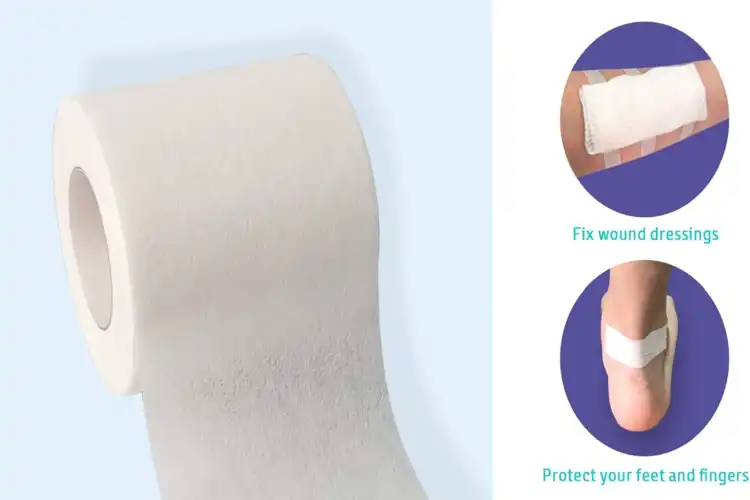
We can make hypoallergenic tape for people with sensitive skin, medical tape that is waterproof for surgery, and tape that lets air pass through it to hold wound dressings in place. Guanma can do all of these things and more to meet your customers' needs.
Are you ready to find solutions for medical paper tape that meet your needs? Our technical team is ready to talk with you about your needs and give you quotes that are just right for you. Send us an email at betty@guanmamedical.com to start working with a dependable company that makes medical tape and is committed to supply, quality, and new ideas.
References
1. Global Medical Adhesive Tapes Market Analysis 2023: Manufacturing Trends and Regional Production Capacity Assessment
2. Comparative Study of Medical Device Regulatory Frameworks: China vs South Korea Quality Management Systems
3. Cost Structure Analysis of Asian Medical Tape Manufacturing: Raw Materials, Labor, and Logistics Factors
4. Innovation Trends in Medical Adhesive Technologies: R&D Investment Patterns in East Asian Markets
5. Supply Chain Resilience in Medical Device Manufacturing: Risk Assessment of Chinese and South Korean Production Networks
6. International Standards Compliance in Medical Tape Production: ISO 13485 Implementation Across Asian Manufacturing Facilities